Chinese Graded Novels: Books for not-quite-beginners

Are you looking for easy Chinese novels? Chinese graded novels are a great way for an older child or even an adult learner to read more extensively, without getting out of their depth. This post explores some of the best graded novels and what my children think about them.

What are graded novels or graded readers?

I’ve written previously about the magic of extensive reading in the journey to mastering Mandarin (yes, I do mean speaking the language).  Graded readers are a helpful for extensive reading, as they are specifically designed stories using a set amount of characters, and with helpful annotations so you don’t have to stop every few sentences to look up the meaning of a new word.  

Chinese graded novels are essentially longer versions of graded readers, which are less kiddy.   We’re talking about long stories with plots and complexity, yet limited character range, which makes for great reading practice.  Such books are written with shorter sentences and deliberately accessible language, which is often repeated.  Very importantly, a good graded Chinese reader wouldn’t contain any contain pinyin above the characters.  Some come with full English translations at the back, and others do not. They have a variety of levels, so the concept is to start at a level where you know >95% of the vocabulary to ensure that reading is pleasurable and not a chore.

A graded reading book is good, if:

  • the story is engaging and well written
  • the reading level is appropriate for the reader
  • It is well annotated

In the post below, I hope to show you some really great Chinese graded novels, and some more average ones too (not everything in life can be amazing!).

How do graded novels in Chinese compare?

We have a couple of different sets of graded ChInese reading novels – all have their pros and cons.  This post compares the differences and similarities between four well-known sets.  These sets are each well-written and researched (some better than others), reasonably engaging, and relatively easy to find.  Buying a set of these will stop you from going on a wild goose chase of other less-known books and alternatives.

Graded readers covered in this post:

  1. Mandarin Companion Chinese Graded Readers
  2. Chinese Breeze Graded Reader Series
  3. Sinolingua Rainbow Bridge Graded Chinese Readers
  4. Graded Readers for Chinese Language Learners (Gaoxiao Zhuti Chuban)
Comparison of graded Chinese novels
Comparison table of Mandarin Companion, Chinese Breeze, Sinolingua Rainbow Bridge and GZC

Mandarin Companion Chinese Graded Readers

  • Books in set: 17
  • Length: 10,000 – 20,000 word length
  • Country of publication: Shanghai, USA, Australia
  • Authors: Jared Turner and John Pasden
  • Publisher: Mindspark Press
  • Difficulty:  Three levels, going from 150 words to 450 unique words (HSK2 to HSK 4)
  • Languages: Simplified Chinese AND Traditional Chinese versions
  • Audio option: Yes
  • eBook option: Yes

Overview: Purposefully written and meticulously developed books that seek to be fun and accelerate language learning, even for a beginner. Most of their titles are Chinese adaptations of Western novels, like Sherlock Holmes or Jane Austen’s Emma. 

A mum’s view:  Highly engaging and pleasurable; there’s something so wonderfully enticing and encouraging about the ways these stories are written.    There is an English introduction setting the scene, and then subtle footnotes on each page for the harder vocabulary.  It’s very nicely laid out and illustrated in colour.  The characters count is more limited, and book range isn’t as extensive as the other series mentioned here, so they’re really great as a first set of novels.  The most basic level is even easier than something like Odonata or Le Le in terms of characters used.  The stories are different enough from the English original versions that the child certainly doesn’t need to know the title already, and even if they do, they will be surprised with the Chinese localization.  I promise you, even for the most reluctant reader, if they pick one of these, they’ll surely make it to the end, and the sense of satisfaction will be worth it!  

My child’s view:  These are my daughter’s favorites by far of all our readers, and I’ve written a separate detailed blog post review of Mandarin Companion.  They’re basically easy-to-read novels and it’s interesting to see the twist they have from the original western stories.

Favourite titles in series: Emma, The Secret Garden, Country of the Blind

Website of the authors: Mandarin Companion (a great website with lots and lots more on it!)

Chinese Breeze Graded Reader Series 汉语凤

Chinese Breeze
  • Books in set: 21
  • Length: 8,000 to 30,000 characters
  • Country of publication: USA
  • Authors: Yuehua Liu, Chengzhi Chu, et al.
  • Publisher: Cheng & Tsui
  • Difficulty: 4 levels, ranging from 300 unique words to 1100 words (HSK 3 to 5)
  • Languages: Simplified Chinese
  • Audio option: Yes
  • eBook option: Yes MP3 or CD

Overview: Original stories from professional authors, purposefully and cleverly written to incorporate HSK vocabulary into interesting stories, covering a wide range of genre including comedy, romance, mystery, non-fiction and more.

A mum’s view: Not super engaging, but very reasonable, and a well thought out layout. Like Mandarin Companion, there is a short outline at the start (in English and Chinese) descirbing the main cast of characters and places.  The vocabulary used sticks more closely to HSK than the Mandarin Companion sets does.  They also cover a really wide variety of genres, including romance, fantasy, and horror.  After we ran out of books in the Mandarin Companion series, this set was a logical one to do next.  Some stories are better than others, so choose titles which you think your kids can relate to.  Also look out for the funny quirks where they are clearly trying to fit HSK vocabulary into a story where it doesn’t exactly fit.

My child’s view:  Not as engaging as Mandarin Companion, but she’ll still happily read them through.

Favourite titles in series: Green Pheonix,  Secrets of a Computer Company

Sinolingua Rainbow Bridge Graded Chinese Readers

Sinolingua
  • Books in set: 40
  • Length: 2,000 to 20,000 characters
  • Country of publication: China
  • Publisher: Sinolingua
  • Difficulty: 7 levels going from 50 to 2500 unique words
  • Languages: Simplified Chinese and English
  • Audio Options: Yes, MP3
  • eBook option: Yes

Overview:  Graded books written around Chinese mythology, legends, folklore, literary classics, and biographies of famous people. They have been designed to provide a collection of reading materials with content aligned to commonly used high-frequency Chinese vocabulary.

A mum’s view:  Each of the books has the Chinese story at the front and a full English translation at the back.  The layout is a bit clunky with the advanced words or complicated phrases explained in the side margins in English, and a large part of each page is taken up by a two-tone picture.  Some of the stories in the lower levels can be a bit awkward due to the highly limited word list, and the English translation is equally clunky.  Then since all the stories are about Chinese legends, the vocabulary tends to be a lot around war, fighting, and army, so not as well-rounded as other series.  There is also short comprehension and vocabulary list at the end too.

My child’s view:   Fun, once you get into them ….. there’s usually a bit of upfront energy because there are names and unfamiliar words at the start.  But then ultimately she enjoys then, and also values having the English translation of the story, to check her understanding.

Favourite titles in series: The Legend of the White Snake, Identifying the Thief by Touching the Bell

Graded Readers for Chinese Language Learners  (Gaoxiao Zhuti Chuban)

Mandarin Graded Readers for Chinese Language
  • Books in set: 50
  • Length: 20,000 to 35,000 characters
  • Country of publication: China
  • Author: Chen Xianchun
  • Publisher: Beijing Language and Culture University Press
  • Difficulty: 3 levels ranging from 500 to 1200 unique characters, however they’re not always common characters
  • Languages: Simplified Chinese
  • Audio option: no (but it might help to listen to some of these stories via Ximalaya to understood)
  • eBook: no

Overview: Abridged versions of historical and contemporary Chinese authors, divided into three subseries of differing complexity being folktales (easiest), literary stories and historical stories (hardest).  These are specifically designed as reading materials for Chinese language learners, including being targeted for lower primary school levels in China.

A mum’s view:  these books are largely kept on the shelf for a later date, due to their length and complexity.  I can see the potential in them though – they’re very similar to a typical novel in length and style.  Some of the stories even go across 2 or 3 books, making them a real feat to get through. I’ve been assured from other mums that they’re extremely well written and captivating, and also try to have faithfulness to the original literature. It would definitely be a great set to work through for out-loud reading with an adult who can read the language, and especially one familar with the original works and history surrounding the writing.

My child’s view:  Too long, and has no context setting in English, so it’s hard to know where the story might be head.

Favourite titles in series (so far): Hua Mulan

Squid for Brains Readers

  • Books in set: 5
  • Length: 8,000 to 11,000 characters
  • Country of publication: USA
  • Author: Dr Terry Waltz
  • Publisher: Squid for Brains
  • Difficulty: The five books get progressively harder.  The easiest book consists of 175 unique characters.  If a child knew ~1000 characters total, there’s a good chance that they’d be able to read nearly everything.
  • Languages: Simplified Chinese
  • Audio option: no
  • eBook: no

Overview: The target audience is for learners of Chinese as a second language.   These Chinese Readers focus on high-frequency vocabulary used during year 1 of most American middle school / high school Chinese programs. They’re written with a great sense of humour and a lot of pop culture references.

A mum’s view:  These are simple text yet complex stories at an age-appropriate level for 10 years+. Good for a reluctant reader. Because they have a highly limited character set, you can buy these books with more certainty that your child actually will be able to read them and learn a handful as new characters too.  It will also likely take them quite a way to chew through the books as they’re long, so it’s like a mini-project for them.

My child’s view:  A great in-between before getting onto real fiction novels, on the easier side, but encouraging to keep reading for pleasure (way easier than Dogman, Dork Diaries or Harry Potter!). Enjoys it because it has “punny” names of people, places, foods, tv shows etc and some of the books use English interspersed between the characters (eg Cheesy Tuna Surprise, Tennessee Fried Chicken, PowerBall).  This brings the narrative to life more for a beginner.

Favourite titles in series (so far): Susan

I’ve written a separate detailed blog post of Squid for Brain chapter books here.

What other great but not-so-hard books are out there?

Please tell me if you discover something great! I have a family of bookworms and we’re always looking for great reads to further our Chinese learning.

For younger children, I would recommend shorter Chinese levelled reading picture books, which I’ve covered in an earlier post. Bridging books are another great option for shorter reads.

I hope that this post has been helpful. If you’ve reached the end and are still looking for more, maybe I have written some other posts which might be of interest:

Youdao Dictionary Pen 3 Review

This post is a detailed review of the Youdao Dictionary Pen 3, their latest version, which has three languages in one.

In 2020 I stumbled upon a wonderful gadget to support Chinese reading, which is our original 有道 Youdao Dictionary Pen, that I first reviewed in Spring 2020, and called the ‘Holy Grail’ of reading pens. To this day, we still have that very same pen, and use it regularly. It works just great. We now how a Version 3.0 of the pen in our collection too.

When the Youdao team reached out to me offering for us to try the Youdao Dictionary Pen 3, do you know why I was instantly interested?  Because the latest Youdao Dictionary Pen 3 contains Spanish too, and our family has started learning Spanish (as well as Mandarin). Their email came at a time when I was wracking my brain thinking of how to do something meaningful to raise funds for the humanitarian situation in Ukraine, and this seemed like a great way. So keep reading to find out more on this.

This is not a paid or sponsored review.  However, Youdao did generously give our family the Dictionary Pen to try, and shortly I’ll be hosting a giveaway of some Youdao goodies through my IG, so you can share in their generosity too!

What is the Youdao Dictionary Pen 3?

Like its forerunners, the main purpose of the Youdao Dictionary Pen 3.0 is to translate individual words or entire sentences between languages, and it provides a dictionary feature too.  The difference with Version 3.0 is this pen has three languages in one – Chinese (Simplified & Traditional), Spanish, and English.

Refer to my earlier post for a detailed review of the earlier Youdao pen and how we use it. In short, with a dictionary pen like this, it’s possible to independently read books (in Chinese, Spanish, or English) and get the pronunciation, meaning, or translation of unfamiliar words simply by scanning it with the pen. 

What’s in the box?

There’s a manual (in English) and a USB charging cable.  To first activate the pen you need Wi-Fi, but once activated, you can turn off the Wi-Fi again.

Youdao Dictionary Pen 3 box and pen
Youdao Dictionary Pen 3.0 (International Version)

The design is nice and sleek, not too heavy (though heavier than the Youdao 2.0 version), and perfect to go into a handbag.  It’s sturdy with a glass touch screen.   The screen is very responsive and a pleasure to use.

I feel much more comfortable using a screen protector on the pen and an outer casing to protect it.  Both of these accessories are available for purchase with the Youdao pen.

Technical Specifications of Youdao 3.0

Battery: 1000mAh; USB rechargable;  6 hours of continuous offline use; 4 hours of continuous online use

Weight: 0.4lbs

Screen: 2.97-inch color full colour LCD screen

Voice Mode: Real voice (English or American options)

Key Features of the Youdao Dictionary Pen 3.0

The best features of the pen are:

  • Fast, high quality translation of text:  converts Chinese text into English (both simplified and traditional, although Simplified is best supported), and Spanish text into English, and vice versa.  It will translate entire paragraphs, with a much more accurate/fluent translation than Google Translate or Pleco.  This is achieved because it’s based on massive contents of millions of Chinese phrases, vocabulary, idioms, etc in a neural network (aka machine learning) in a variety of contexts.
  • Translation of text to speech:  turns scanned text (English, Spanish or Chinese) into audio
  • High quality translation:  the translation is miles better than Google Translate.  This as the first thing I noticed, and also the first thing which two of my Chinese speaking friends commented on when I showed them.  It’s based on massive contents of millions of Chinese phrases, vocabulary, idioms, etc to make it as fluent as possible in a variety of contexts.
  • Dictionary definitions in CH, EN, or Spanish:  It gives a definition of the scanned text, and breaks it down into words/phrases, with a definition of each character/word, using the touch screen.  It’s possible to look up words in different dictionary versions and compare them too. The dictionary definitions also include built-in English dictionaries, so you can get the English definitions of English words (a helpful feature for a looking up unknown words).
  • Works on different fonts and handwriting:  the pen will scan correctly on multiple font shapes, including very neat and small handwriting
  • Works in offline mode:  There’s a slight difference in voices used when Wi-Fi is off as it becomes more robotic (I assume the smoother voice is related to engaging AI neural networks).
  • Other user friendly features: Left-handed and right-handed usage modes.  Clear voice that is easy to understand, with adjustable volume. For Chinese, it can show Pinyin.  It can also connect to Bluetooth if you want to hear the audio through a headset or phone instead.

Photographs from using the pen on Spanish books

Photographs from using the pen on Chinese books

Key differences between Youdao 3.0 and earlier models

Overall, the most obvious differences are:

  1. Includes Spanish
  2. The screen is colour and 50% bigger
  3. Single touch translation for Chinese (rather than need to drag over words)
  4. Faster, smoother translation
  5. Ability to create a user wordlist for review

In essence, Version 3.0  Youdao pen comes with some slightly more user-friendly features AND includes a whole new language!

Expanding on the unique features of Youdao 3.0. you’ll find it includes:

  • Single tap feature: with a single tap, the pen will read a group of characters (about 3 or 4). Which makes it quicker than previous versions where it was required to scan over the whole character/word.  For learning Chinese, a specific character can be VERY different from the meaning of the combined characters around it, and a child may not be aware, so I like this feature. This feature doesn’t work for Spanish.
  • Screen size: it’s 50% bigger than the 2.0 screen, and in colour (which correspondingly means the battery life is shorter)
  • Word Book:  Has a feature where upon scanning, the phrase can be easily added into a list on the pen, by clicking a star (a bit like the way you can favourite bookmark a page on Chrome).  Good for reviewing unfamiliar words after reading a passage.  This feature also exists on the 2.0, but with the 3.0 the list can also be converted into flashcards and trivia on the pen, to help make a word really stick into active memory recall.
  • Wi-Fi Connectivity:  simple to search for and join any network, in case you’re studying at Starbucks (or the school library).
  • Language change setting:  easy to toggle between Spanish and Chinese from the menu bar
  • Speaking practice:  There is a pronunciation correction whereby you can record yourself pronouncing a word, and it gives you a rating between 1 and 5 stars.  It works in Chinese, English, and Spanish.  It’s a little gimmicky to me. 
  • Smoothness and speed of translation: it certainly has an edge on 2.0.  It’s not too robotic, but there is no adjustment to change speed of translation if it’s too fast (and it is pretty fast).
  • Double tap for pinyin and stroke order (or conjugations for Spanish): intuitive menu design so that when scanning a Chinese character, you can find out more with a screen click. For Spanish, if you scan a verb, it has the verb conjugation according to pronouns and tenses.
Comparison of Youdao pen boxes
3.0 International Version versus 2.0 Standard Version packaging
Comparison of Youdao pens
3.0 International Version versus 2.0 Standard Version pens

Main versions of Youdao pen

Comparison of Youdao Pen Versions
Youdao Reading Pen 3.0 has Chinese, Spanish, and English

The main Youdao pen versions in the market are:

  • 有道 Youdao Dictionary Pen 2 (Standard Version) [reviewed previously]
  • 有道 Youdao Dictionary Pen 2 (International Version) [reviewed previously]
  • 有道 Youdao Dictionary Pen 2.0 Pro
  • 有道 Youdao Dictionary Pen 3.0 (Standard version)
  • 有道 Youdao Dictionary Pen 3.0 (International version) [THIS REVIEW]
  • 有道 Youdao Dictionary Pen 3.0 Pro
Comparison of Youdao Dictionary Pens

Guide to the model names:

International Versions:  have an English user interface and instructions, and the Standard Versions have Chinese operating interface. The English user manual lets you understand the features of the pen, and also how to troubleshoot when things go wrong.  It’s not very detailed, but it’s enough to understand the basics.

Standard Version: has Chinese interface and appears to have slightly more menu options and functions available than the English version (eg some listening games, phonics learning, textbook narrations, etc)

Pro version:  Much more expensive as it includes Japanese and Korean too (and a bunch of extra dictionary versions)

Cons of all 有道 Youdao Dictionary Pens

This Youdao has many of the same cons as the original 有道 Youdao Dictionary Pen, which I’ve mentioned in my previous review.  Here are the key watchouts:

  • Text size: Only works on text less than 1.3 cm in size (so excludes some children’s picture books and readers).  It’s not a big issue, but something to be mindful of, depending on your intended use for the Youdao. 
  • Voice: Only has a female voice, and I do think it’s helpful to hear a variety of different voices and genders.
  • Translation accuracy: It’s really pretty good. But sometimes the translations can still be incorrect (there is a simple button to report this if you do spot it), or just clunky.  Nevertheless, the translation quality is SO much better than Google Translate or Pleco.
  • Pointing accuracy: sometimes I’ve watched my daughter needing to make multiple attempts to scan the same character. Whilst it’s fast, there still is a bit of a gap (versus other pens we’ve tried), which can become frustrating when repeating something a few times over.
  • Ergonomics: The pen isn’t conducive for small hands, and optical reader can be fragile (not a toddler toy!). I certainly wouldn’t be using this pen with a preschooler (check out Alpha Egg instead for a preschooler).  Remember to buy a protective case when you buy the pen. 
  • Spanish is not as extensive:  Whilst words will translate from Spanish into English definitions quickly, not all words/sentences have spoken audio for pronunciation, and the dictionary appears more limited.  This is certainly a missing feature at the moment.
  • Scans screens, but not consistently:  you need to have the screen brightness turned right up (not night mode) and it works with a few efforts.
  • Pinyin:  doesn’t show pinyin when a sentence is scanned
  • Not really toddler proof or for young kids: If you’re looking for something more suited to a younger audience, check out the Alpha Egg Dictionary Pen, or even Habbi Habbi Reading Wand.

Where to buy Youdao Dictionary Pens in Singapore?

In Singapore, these pens are now plentiful on Lazada and Shopee, and most offer a 1-year local warranty.  My pen came from a local seller called Seagate. If you buy from the official Youdao store and Amazon you can receive a 20% discount with  LAHLAHYD20 coupon code. It will also generate 10% donation to a charity that can provide support to the Ukraine, which will be donated at the end of May 2022 (when this coupon code will be removed).

Do take note of the specific version you are buying though as some will have only a Chinese user interface, and others will offer English. Some versions have written instructions in English, and others will not.

As readers of this blog will know, this blog runs on a non-profit, no-affiliation, sponsorship or commission basis.  But as a ONE-OFF this post contains the above time-limited affiliate link to support the humanitarian situation in Ukraine. This will be removed on May 31st 2022.

If you are buying this pen, do also check out Youdao’s other clever devices for home learning including (all much much cheaper than their dictionary pens!):

  • Pocket Printer: a tiny thermal printer which connects directly to your phone via Bluetooth. Reviewed in my earlier post.
  • Electric Eraser: particularly good for Chinese composition corrections, as it lets you erase a specific area with precision and speed.
  • Electric Pencil Sharpener: it’s seriously sharp
  • Desk Vacuum Cleaner: it’s an indulgence, but great for encouraging a child to not spread their eraser dust all over the floor.

Note regarding the donation to charity: I have chosen a charity which is working directly with Ukraine’s Ministry of Health and other on-the-ground partners to provide urgently needed medical aid, including emergency response packs intended for first responders, oxygen concentrators, critical care medicines, and much more. I haven’t disclosed the name on this blog yet, as I’m waiting for confirmation from the charity’s side that this would be okay. At end of May 2022 when the promo code link expires, I will disclose the total donation $ generated from this link.

FAQs on 有道 Youdao Dictionary Pens

Which option do we prefer?
As we learn Spanish too, the 3.0 naturally is the best choice for our family as it contains both Chinese and Spanish.

Overall for just Chinese, the 2.0 and 3.0 are each great – I would go with the International Version for sure,  as having the English Instructions and the operating interface is a huge plus.

Does it do Traditional Chinese?
Yes, it will scan and translate from TC into English.   It will do vertically oriented text, and it will do right to left scanning.

However, it doesn’t do it in reverse, in that if you scan English, it will only convert it into SC (not TC).  Additionally, it won’t translate Zhuyin, and it gets a bit confused with vertical text if it has Zhuyin directly above it.  It’s really not compatible with this.

Will the software/dictionaries become outdated?
No, the pen connects to wifi to ensure the latest system software updates, including new words, voices, etc are included.  It’s as simple as clicking “Settings-Upgrade” and keeping the pen connected to the wifi during the upgrade (usually it doesn’t need wifi to function)

How long does the battery last?  How long does it take to charge fully?
Our Youdao 2.0 version lasts for about 8 full hours of continuous use (which is a really really long time, as likely a child will use it intermittently through reading …. for us, it lasts about 4 weeks!).  The battery fully charges in 3 hours.

Our Youdao 3.0 lasts for ~6 hours if used continuously, and take less than 3 hours to fully charge.  At about the 6 hour mark, it drops off very fast.

What are the options for pronunciation?
For English, it’s either British or American in a female voice.  You can choose this from  “Settings-Pronunciation” to set the default automatic pronunciation. For Chinese, it’s mainland Chinese in a female voice.

Will Youdao pen work for our family?
We’re a family where no parents speak any Chinese, and yes we use this pen daily – both my daughter, and myself, for different purposes.  SO this pen works great for us.

Then I know of other families in Singapore with many kids (like the Tan Family) who have three children too, and even though the parents do read Chinese, it’s not practical for her to sit with all the children when they’re reading at the same time. I’ve also read various reviews from others who use these pens in different family backgrounds. For example, Sunny from Spots of Sunshine is a fluent speaker, teaching her daughter in Traditional Chinese. Her review shows it’s less valuable in such a circumstance. Then again, Aime from Trilingual Texpats is a Taiwanese-American mother who teaches in Traditional Chinese and really likes the Youdao pen’s functionality.  So as you’ll see, it’s quite family-specific.

Comparison again other Chinese Reading Pens

Different reading pens and curriculums suit different learning stages, ages, family situations, and intended learning outcomes. I’ve tried to summarise this in the below diagram.  As a learning tool, Yaodao Dictionary Pen is definitely for older children and adults, who are already very fluent at both reading and speaking, and wanting to advance their language skills.  (It’s also for English-speaking parents who know nothing of the Chinese language and simply just need ongoing translation to get by!!).

Chinese-English Reading Pen comparison
Comparison of Chinese Reading and Dictionary Pens
Comparison of Chinese reading pens

Do refer to my previous posts for more information about other Chinese reading pens which are more suitable for younger children, especially preschoolers– these include:

Review: Youdao Pocket Printer for Chinese home learning

The Youdao Pocket Printer is one super cute little thermal printer, which is ink-less and wireless, and connects to your phone. You can print notes, photos, flashcards, invitations, and much more all from your iOS or Android device.  And the reason it features on my blog is it has a full Simplified Chinese character range too, including some nifty applications for learning Chinese.

The printer was recently gifted to me from Youdao, with no compensation nor obligation to write a review or blog post.   As readers of this blog will know, this blog runs on a non-profit, no-affiliation, sponsorship or commission basis.  But as a ONE-OFF this post contains a time-limited affiliate link, which will give you a 20% discount on Youdao products and also donate 10% to a charity supporting the humanitarian situation in Ukraine.  I feel it’s a worthy cause, and no, I haven’t been paid to say this either.

What is a thermal printer?

It’s a tiny little printer that uses a small roll of paper (think of a shopping docket), and a phone app to send signals to the printer via Bluetooth.

You don’t need any ink for these printers, which is fascinating.  Thermal printing uses special paper (thermochromic paper) which goes through a thermal print head to create a digital image.  It means that you don’t need to worry about ink refills or mess when changing cartridges.  All you need is a roll of thermal paper!

There are a few brands out there.  I like Youdao because the app also allows for Chinese characters and has some interesting functions which link back into Youdao’s dictionary among other things.

What’s in the box?

The printer – it’s about the size of a clam-shell flip phone.  The printer comes with the paper already loaded and the printer partially charged. 

USB c-charger

English instruction manual

It’s so simple. Just open the box and go.   You’ll need a smartphone to link the printer to the Youdao Pocket Printer app (download this first). It can be set up within a few seconds.

The system language default is English, but it can be changed to Chinese.

Youdao Pocket Printer

Why would you use it?

These are some of the things we have used this black and white printer for…..

Flashcards and vocabulary:    The printer can also be connected to the Youdao Dictionary APP to print out words and definitions and add pictures.   Personally, an improvement I’d like to see Youdao make is to add a set of preexisting flashcards directly into the app, rather than just the template.

Character writing practice: You can print out practice handwriting sheets for pinyin – you can do this from pre-existing pictures (or use your phone to photograph from a textbook). 

Printing out lists or information for the kids:  My kids do a LOT of online classes, and usually, I get emailed the Zoom details for these.  Instead of having to write these out, I can simply print out the details direct from my email for the kids to use.

Birthdays:  Firstly, you can print the birthday invitation this way.  Secondly, it can do cute black & white photos at the party – it’s not a polaroid camera, but it’s cheaper! Don’t expect anything too fancy – it’s 200-dpi resolution and grayscale, but still a fun gimmick.   Finally, if you want to chew through the thermal paper, it’s simple to print a long banner to decorate the party room. 

Shopping lists or to-do lists for the kids:  there’s a template for this, and drafts can be saved, so you can add to it during the week and then pass to your husband 😉  You can also save past lists or designs to print out again, so something I use this for is printing a list each week for the kids of things to work on. 

Scanning text: It has a clever OCR technology that can pick up printed text (eg from a book or song lyrics) and place it into the app.  So it’s possible to print out a memory verse or moxie passage and pass it to the child to revise.  It’s a perfect size for sticking into the school diary too. 

Business functions:  we haven’t done this, but you could easily print receipts, QR codes, barcodes, business addresses etc using the printer too. 

Pros

  1. Lots of existing templates and filters: enabling you to easily design fun and creative notes, photos, labels, banners, etc Notably, this also includes specific designs for Chinese flashcards.
  2. Includes a text scanning and extraction feature: can scan English or Chinese text (eg a phrase from a book) and print out the selection
  3. Ability to print from web pages or photos – so simple and this includes the ability to link into the Youdao dictionary app too, and print definitions of Chinese words, etc.
  4. Portable:  it’s 7.5xm x 7.5xm x 3.0 cm, and study – nothing loose or too technical. 
  5. Low cost: the refills of paper are ~US2.00 per roll (or less).
  6. Different colors of paper, including adhesive stickers:  paper refills come in pastel yellow, pink and blue, as well as white, and include adhesive paper for labels/nametags too

Cons

  • Quality of photo printing:  is not ideal, but for simple black and white, it’s very clear. 
  • Longevity of the printouts:  You know how a shopping docket fades?  This will too, and it depends on the quality of the thermal paper you buy.  The basic paper will fade in 3 months at normal temperatures.   Apparently, the retention time can be 20+ years with the fancier paper (if I were to test this fact, the blog post wouldn’t come for a few more decades). 
  • Availability of the app:  The printer won’t work without the app.  The app is not available in all geographies, so check it’s available in your app store before purchasing the printer!
  • Sensitivity to heat:  Heat exposure damages thermal paper permanently – so don’t leave your printer or the rolls of paper in direct sunlight or heat from the kitchen area, etc.

Where to buy the Youdao Pocket Printer?

The Youdao pocket printer is widely available on Amazon and Shopee. 

If you buy from the official Youdao store and Amazon you can receive a 20% discount with  LAHLAHYD20 coupon code. It will also generate 10% donation to a charity that can provide support to the Ukraine, which will be donated at the end of May (when this coupon code will be removed). 

If you are buying this printer, do also check out Youdao’s other clever home stationery solutions too (you think I’m joking right??). Their electric eraser is particularly good for Chinese composition corrections, as it lets you erase a specific area with precision and speed. Their electric pencil sharpener is seriously sharp. And their teeny tiny desk vacuum cleaner is an indulgence, but great for encouraging a child to not spread their eraser dust all over the floor (and it comes with Chinese vocab cards on the top, for subliminal learning!). I’d never had dreamed up such inventions, but they’re a hit in our house.

What other gadgets are helpful for learning Chinese?

If you know any, please share! We leverage a lot of gadgets and tech in our quest to be a trilingual family. Other technology which I’ve reviewed previously that you may enjoy for learning Chinese includes:

Note regarding the donation to charity: I have chosen a charity which is working directly with Ukraine’s Ministry of Health and other on-the-ground partners to provide urgently needed medical aid, including emergency response packs intended for first responders, oxygen concentrators, critical care medicines, and much more. I haven’t disclosed the name on this blog yet, as I’m waiting for confirmation from the charity’s side that this would be okay. At end of May 2022 when the promo code link expires, I will disclose the total donation $ generated from this link.

Book Review: Magic Tree House in Simplified Chinese 神奇树屋

Magic Tree House in Simplified Chinese (神奇树屋) is a great book set for a child who has finished with levelled readers and bridging books in Chinese, and is ready for a new challenge.  The reading level (lexile) gradually becomes harder as the series progress. 

Key Information

  • Author:  Mary Pope Osborne
  • Number of books in set:  58, of which first 28 are the remainder are Merlin Missions series.
  • Number of lines per page: 2 – 25
  • Number of pages per book: ~100
  • Total length of the book:  For the first 28, it’s 5000 ~12,000 characters in length, and the 29 – 52 set (Merlion Missions) are about 50~80% longer in length.
  • Characters required by child to read it independently: 1500+ (with a dictionary or reading pen to translate scientific terms)
  • Pinyin: No
  • Bilingual: some versions
  • Available in Singapore NLB: Yes
  • Original language of publication: English

Synopsis of the Magic Tree House

Put simply, the story is about a brother-sister sibling pair who know the secret location of a treehouse filled with magical books.  They regularly climb up into the house when no one is looking to read.  When they point to the pictures in the books, the sibling duo is magically transported to that place and time in history! On each trip, Jack and Annie have to navigate situations and adventures to gather objects or achieve goals.  They go from space, to the artic, to pyramids, and even a panda reserve in China.

The Magic Treehouse books have literally been around for generations – first written in English in 1992.  They’re universally loved and translated into 35+ languages, including Simplified Chinese and Traditional Chinese. Countless kids have discovered a joy of reading through this series – in both English, and also Chinese, as you’ll realise from a quick google search.

A Mum’s View

I really like the set because it blends non-fiction into a fun fiction narrative, and it’s a very different type of vocabulary from other Chinese book sets we have (my kids like it better than Magic Schoolbus too).

Yes, the narrative is simple and pretty flat – it’s not thrilling literature, but what it does is encourage children to do is to read longer books.   If you’re a parent who can read Chinese, you may get bored by how simple this set is ….. I know I found the same with the English version – I felt that it’s not a series to really read aloud, but more to work through together.  I know there are families who do listen to this as an audiobook (there are Mandarin recordings on Ximalaya), but that really would have bored me with the English version.  For Chinese, I love these books because because we don’t have too many chapter books at the right level (most are waaaay to hard), and therefore Magic Treehouse has been great for extensive reading.

If your child has already read this in English, they may be hesitant to read it again in Chinese. I don’t blame them either (unless it’s several years apart).

What’s excellent about Magic Tree House

  • Exciting plot,  clear storyline, and limited characters  – seems to have a magic effect on kids
  • The length of each book – the books can be reads across several days, and the chapters are short enough to read one or two in one sitting. 
  • Grounded in scientific, historical, and geographic facts (mixed with a bit of mythology and fantasy, which can become a bit blurred)
  • Simple introduction to reading novels –  Really nothing complex about it at all, although the complexity does increase as the series progresses.  Don’t be put off by the handful of scientific terms – that’s the only real challenging part, and they’re repeated, and it’s a good way to pick up new, relevant vocabulary.
  • Appealing for both genders – especially great for a child interested in history

What to watch out for

  • Simpleness of narrative  – we have the English set too, and I know from reading this series with my kids how simple the vocabulary and sentence structure is.   It’s nothing particularly special in terms of literature, and it’s not something I encouraged my children to continue reading after they got the hang of reading in English (characters are very shallow and dialogue is flat).  . 
  • The pictures and paper quality – our Simplified Chinese version is all in black and white, and they illustrations are not overly clear; our Bilingual Version is two-tone, with totally different illustrations, and much thicker paper.  I’ve been looking out EVERYWHERE for a full colour copy.  The translated versions have all been drawn by different illustrators depending on the language. I’ve seen gorgeous full colour in the Traditional Chinese version (check out this blog post for photos of the TC full colour version ) but nothing similar in SC.
Magic Treehouse in Simplified Chinese
You can see from the difference in shelf space taken up by the different versions that one has thicker paper than the other!
Magic Treehouse in Simplified Chinese comparison of against English
Narrative is very simple – all sentences grammatically correct, and punctuated etc. Layout between both editions is slightly different.

Book Titles & Versions

Our box set in English has 31 Books.  (all from the original series).  One box set in Simplified Chinese is the same.  In terms of pictures, and layout, they’re identical, just in different languages. This is the same version which can be found in Singapore’s National Library Board (NLB) collection.

Our Bilingual Chinese-English box set is totally different.  Firstly it has 34 books (28 from the original series, 5 books from the Merlin Missions series).  Secondly, it’s laid out with Simplified Chinese at the front, and English at the back.  Thirdly, the Chinese translation is slightly different from the Chinese-only version (it’s probably a bit more thoughtfully done).  Finally, the pictures are totally different!

The first 28 books titles are the same in both our sets.  Then the titles differ – this is because newer simpler stories were subsequently written as books 29 – 31 .   The book “Christmas in Camelot” (Originally book 29) and subsequent now make the first stories in the harder set of Merlin Missions.

Magic Treehouse  bilingual Chinese-English version
 Simplified Chinese Version (published 2019 by Penguin)Bilingual Simplified Chinese Version (published 2006 by Random House)
Book 28High Tide in HawaiiHigh Tide in Hawaii
Book 29A Big Day For BaseballChristmas in Camelot
Book 30Hurricane Heroes in TexasHaunted Castle on Hallow’s Eve
Book 31Warriors in WinterSummer of the Sea Serpent
Book 32Winter of the Ice Wizard
Book 33Carnival at Candlelight
Book 34Season of the Sandstorms

The titles between the translations differ too, as you’ll notice from the photos. The version on the white background is our bilingual set, and the version on the wooden background is the single language version which we borrowed from the library (it’s the same layout as the English version).

Single language versions of Magic Treeh House are laid out identically
The bilingual version is illustrated and laid out differently

What level is it for?

In America, the English version is on booklists at Grade 2. 

In Taiwan, the Traditional Chinese version is on booklists at Grade 3. 

For Magic Tree House in Simplified Chinese in a Singapore context, I’ve never seen this on a reading list.  I would suggest about Grade 4.  My daughter started it in Grade 3, and it was a challenging read – mainly because of the amount of new vocabulary related to science/history, which required looking up the meanings for. 

The stories become increasingly longer and more complex, with less pictures, for example:

  • Book 1 – Dinosaurs Before Dark 66 pages, ~ 150 characters on every second pages; ~5000 characters total
  • Book 28 – High Tide in Hawaii 73 pages ~ 200 characters on most pages = ~ 12,000 characters
  • Book 34 – Season of the Sandstorms  113 pages ~300 characters on two out of every three pages, ~20,000 characters total

Where to get the book from?

Great news – the entire Magic Tree House in Simplified Chinese set is available from Singapore NLB in their Chinese collection (look in the “OSB” section of Junior Chinese Fiction).  Otherwise we couldn’t find a single store on the island which sells it.  Plenty of options from Taobao and JD, and occasionally Lazada.

Magic Tree House in Simplified Chinese 神奇树屋
These are the front covers of our bilingual version – which we managed to pick up a bargain on secondhand. Compares these titles with the first photograph in this post, and you’ll see the book translations are slightly different.

What’s your favourite graded reader?

I would love to know what books you think are great at this same level as Magic Tree House in Simplified Chinese! Please add comments below, or through my my Instagram or Facebook feeds. It’s only through meeting other wonderful parents virtually, that this shared language journey becomes a more valuable one.

If you’re in Singapore, join the conversation with other like-minded parents at the FB Group Ni Hao Singapore Primary School learning, which I host along with a few other Singapore-based bloggers.

I’ve also written detailed reviews of other graded readers that we’ve tried, and Chinese learning resources, see below:

Are phonics or pinyin needed to learn Chinese?

This is a topic for much debate – and you can see from the different syllabi used between countries (and schools), that there is no unanimous alignment on this.  However I want to share a few facts and observations, so you can also make a decision on what might be best for your family.  I find this area of linguistics and literacy fascinating. 

What is Hanyu Pinyin?

Hanyu Pinyin (拼音 or often abbreviated to pinyin) is the official romanisation system for Mandarin Chinese, originating from Mainland China.  It’s also officially used in the Singapore education system. The pinyin system was developed in the 1950s by Chinese linguists, and was based on earlier approaches to romanise Chinese words, but which weren’t fully consistent.  In 1958 the Chinese Government published a standard list, which is still used today.

Hanyu (汉语) means “the spoken language of the Han People” and Pinyin (拼音) being “spelling sounds” (essentially, phonics).  It’s a way of using the Roman alphabet to decode Chinese characters.  Every Mandarin syllable can be spelt with one equivalent combination of alphabet letters, with a diacritic above to indicate tone.   The system fits nicely on an A4 page, which is quite an achievement for a language with over 50,000 unique characters. This provides a basis for alphabetic order or words for some modern dictionaries too.

(In a fascinating political backstory, Chairman Mao was actually considering romanising the entire written Chinese system and dropping the characters, but was advised in 1949 by Joseph Stalin that China should maintain their existing writing system.  Still, Mao’s vision kickstarted a committee to reform the Chinese written language, in order to increase literacy rates among adults.  Thus the Standard Chinese Hanyu Pinyin System came about).

Why is Pinyin taught?

Fundamentally, phonics (or letter/symbol–sound relationships) are a key to becoming literate in most languages on Earth. Even languages that are said to be non-phonetic in nature (eg ideographic or logographic scripts), do indeed also use a method of teaching to read and pronounce words by learning the phonic value of characters and groups of characters.   

This is exactly why even for countries like China and Taiwan, where Chinese is the primary language of instruction, they also rely heavily on teaching phonics (or syllabary symbols) in their curriculums.  Phonics are essential to give structure and order to the character set.   

Whilst pinyin has the value of enabling non-Chinese speakers to “read” or pronounce the Chinese language, its main use is actually within China itself, enabling learners there to have a good framework themselves to learn new characters and pronunciation. Other benefits include giving alignment on geographic places and names which need to be translated into English, and the fact pinyin is MUCH easier to type into a computer too. 

Why is there debate about teaching Pinyin?

Firstly, the debate over phonics and Pinyin doesn’t seem to be within China or Taiwan.  These countries use the phonetics as part of their teaching. Moreover, it is the foundation of much of the learning system.  However, ultimately the focus is on a child being able to read/write using only characters, with phonic tools as an aid only.

The debate over pinyin occurs in countries where Chinese is being learnt as a second (or subsequent) language, typically AFTER a child has already learnt to read in English, and is well aware of English phonics. 

There are two fundamental points in the argument against pinyin:

  1. The Chinese pinyin phonics are not a direct translation of English phonics.  Yes, pinyin assigns some letter sounds that are quite different from those of most English speakers.    For example, in English  “c” is pronounced as a “k”, but in pinyin it’s more of a “ts”.  So in the very common Lunar New Year greeting,  “Gong Xi Fa Cai”, the final character is a “tsai” rather than a “chai” or “kai”.  This explains why non-native speakers get it wrong ALL the time. However, I see this in the same way as a child who can read English cannot then go and read a paragraph written in French and expect to get all the pronunciation correct, simply because the alphabet is the same.  One needs to learn the language first. So this issue is not limited to pinyin, but it gets more airtime because obviously there is a credible alternative to not using pinyin, which is to only teach the Chinese characters themselves. 

  2. It can hinder a child from ever learning Chinese characters.  This to me is the MUCH bigger issue.  Children may become reliant on the pinyin and never learn the characters. Indeed, pinyin has became a key tool for many foreigners to learn Mandarin pronunciations, and this may be where it becomes a hindrance or crutch, depending on how and when it is taught. Put simply, you just cannot learn to read Chinese characters in the same way as English is learnt. If pinyin if it’s introduced too early or in a wrong way, it could be replacing this brain connection required for properly learning a logographic language, and also the aural connection to listen out for correct pronunciation. .

In summary, learning to speak Chinese accurately relies on listening, not overlaying a western pronunciation; whilst acquiring literacy requires following symbols and deconstructing a character to derive its meaning, rather than short-circuiting it with pinyin.

A great read on this topic the blog post Pinyin over Characters: The Crippling Crutch, which is written by the authors of some of our favorite Chinese novels called Mandarin Companion which is aimed at removing that crutch and helping a learner to walk by themselves.

Mandarin Companion has a nice approach of placing pinyin in reference notes at the bottom of a page, rather the distract the readers attention using it in the main text.

When should Chinese phonics be taught?

In China and Taiwan, phonics are introduced AFTER a child has started learning to read in Chinese characters, and obviously this is well after they have started speaking and understanding the language. On average in China, a student knows >600 characters before starting to learn pinyin, according to this article.

Outside of these primary Mandarin speaking regions, phonic systems like pinyin are often used at the start of the Chinese language learning process, where a child or adult learner may neither understand the spoken language nor yet be able to read any characters in it.  Ultimately,  non-native Chinese learners will be more familiar with the English alphabet, so pinyin helps makes the learning easier. Perhaps for an adult this is right approach (I’m still not sure) as they’ll already be struggling to learn new words and terms. However, in doing so, many will continue to rely on the pinyin and turn a blind eye to the Chinese characters, especially when pinyin is put in tandem in most textbooks.

In Singapore, Hanyu Pinyin is officially introduced only at Primary 1 – this is deliberate in order for children to learn some spoken Chinese (and ideally character exposure) prior to introducing phonics, much like the systems in China and Taiwan. From my understanding of the Singapore MOE Chinese curriculum (revised in 2015), local kindergartens are not actually allowed to teach pinyin.

This approach aligns with credible research showing that children who don’t start pinyin until their literacy already exceeds 1000 characters are less likely to rely on pinyin as a crutch (see great post here on the topic).

But, who would that stop pinyin being taught early in a kiasu country like Singapore? Many private schools will still teach this in the K1/K2 classes. In many cases, specific pinyin classes are also encouraged by private tuition centres, pandering to parents’ insecurity about wanting their child to have prior knowledge before starting formal primary schooling years.  A pinyin course is a relatively easy thing for a tuition centre to offer because it is only a fixed 35 vowels, 23 consonants, and four tones plus a neutral tone, and ….vrooooom, your child has crammed in the entire knowledge of pinyin. I’m sure some kids really do lap it up and it works.

Whilst debate remains, there is now an emerging body of research showing that if pinyin is introduced simultaneously with a child learning English phonics, this may even create a double confusion – because a child who is still only grasping basic phonics in English, is also using the same letters to do phonics in Chinese, which is every so slightly differently pronounced and used.  Let’s wait and see where jury lands on this.

In concluding, let me reverse this question and ask why don’t more parents in Singapore actually focus to teach their children to read characters prior to starting school? I really don’t have a good answer. But I have a good reason why you should try….. in many respects its EASIER for a young child to pick up characters than phonics, as memorising a character doesn’t require any use of decoding. Case in point: my two year old could recognise about 30 Chinese characters and read simple books much earlier than she could read an English book (because knowing 26 alphabet characters still doesn’t let you read a sentence, unlike Chinese characters.). She got great enjoyment out of the reading, and this positively reinforced her to want to keep reading and learning. She’s now five and and still doesn’t know any pinyin.

Learning characters can be daunting without any omanisation, bur that’s where clever audio tools like Luka and reading pens can help

What alternatives are there to Hanyu Pinyin?

In Taiwan, there is also a phonetic system, called Zhuyin (or BoPoMoFo), which uses a system of symbols rather than the Roman alphabet.  In fact, the system of phonics used is almost the same structure as Hanyu Pinyin, although takes longer to learn as it’s not as simple as using the alphabet, and instead uses symbols which look like pieces of traditional characters.    The use of zhuyin in Taiwan is analogous to the use of Hiragana and Katakana in Japan…. using symbols to turn a logographic written language into a phonetic one.

Many mothers from Taiwan say Zhuyin is essential (see a great recent blog post here from Motherly notes and an older one from Guavarama singing its praises). I personally think the fact that the zhuyin symbols look nothing like the English alphabet is a big plus versus pinyin, as it removes the brain’s association with the Roman alphabet and perceived pronunciation from that perspective.

As within Pinyin in Mainland China, Zhuyin in Taiwan usually isn’t taught first either. I’ve read in a few places there is a rule of thumb to know ~500 Chinese characters before starting zhuyin, which is not overly different from the official Singapore Government approach to learning pinyin either. One key argument for learning zhuyin earlier is it enables a child to start writing earlier, as the symbols are easier than Traditional Chinese characters (this isn’t so much of an issue in Singapore with Simplified Chinese characters however).   

In a Singapore context, I know many families where children have successfully learnt Zhuyin AFTER they’ve nailed Simplified Chinese characters, and it’s been a wonderful benefit to them too. This benefit has mainly been so that a child can read many more of the Taiwanese published novels, and is a good start to learning Traditional Chinese. 

Should we just ignore pinyin?

No, whilst it’s not essential for beginners, it has a good purpose.  Just as phonics are key building blocks to most languages, pinyin is helpful in the process of learning Chinese – but I personally feel that it needs to come later.  If you’re worried about your 4 year old not being taught pinyin in school and looking to pay $$ for a private enrichment class, please do rethink this.

If your child already reads English, they’ll very naturally pick up pinyin down the track by themselves with no effort.  Pinyin certainly is a helpful aid to how to pronounce new words, and enables a child to learn the language by themselves from a textbook or dictionary.  The tone marks too are great visual reminders, since mastering the tones can be tricky for non-native speakers.  Ultimately it also helps greatly in writing on a computer/phone, as majority of Chinese systems and apps use pinyin as input. 

The clear advantages are nicely articulated in this Hands-On Chinese post about how and when to introduce pinyin. What you want to avoid when learning pinyin is using it as a default and becoming dependent on it, and not properly allowing a child to fall in love with Chinese characters themselves. 

How we approached it?

Ultimately, there is still a LOT of debate on this topic, so I wouldn’t stress over what’s right or wrong, provided that learning real Chinese characters (or English literacy) is not being delayed due to introduction of pinyin.

After reading up much on theories on second-language learning, I became convinced that the first step to learning Chinese for my children would be listening and speaking, not reading or writing.  Then, learning real characters would be the next step, rather than learning pinyin (since it’s really only ever supposed to be an intermediate tool or aid).

Therefore, my children did not learn any pinyin prior to learning to read characters in Chinese.  When we started our literacy journey,  I deliberately used a home learning system (in our case, Le Le Chinese Character learning system) which enables a child to effectively self learn first ~1200 characters without any pinyin.  The system also works for parents who cannot read Chinese either, as it comes with a reading pen.  This was our main start to literacy, combined with apps like iHuman, which don’t have pinyin (unless you add-on that module).  I only ever bought or borrowed books without pinyin, and I even designed a little reading ruler to cover up pinyin on books where we really couldn’t avoid it.

Le Le Chinese emphasis is on literacy through stories, WITHOUT pinyin
In books where we couldn’t avoid pinyin, I made a plastic reading ruler to cover it up, using plastic sheet and washi tape.

In P1, the first half of the year (eg Term 1 & 2) in Singapore syllabus is spent learning pinyin.  The laoshi tends to go through this VERY fast, as most children already were taught it in advance.  What this meant is my daughter didn’t score at all well on P1 & P2 spelling tests where pinyin was involved, as she didn’t know it well enough (whereas just about all her classmates already knew it before starting school).  It was actually painful to see her struggle on something so meaningless, and I felt like the teachers were reinforcing learning than teaching at this point, which is an irony in itself.

But, by P3 the tables turned.  At P3 level, the Singapore MOE has a policy to essentially drop pinyin and leave only characters.  For most children, this was a big hurdle, but for us it was time to shine!  Finally my daughter started scoring 100% on weekly tingxie tests.   By that time she was already reading novels in Chinese with no pinyin, although she of course now understands pinyin and can use it to self-learn new vocabulary. 

I think our learning strategy has been vindicated, and certainly, nothing lost (note least the $ potentially spent on classes) from not starting pinyin any earlier.  Another perk is that books without pinyin tend to be cheaper, as the publishers know those with pinyin are focused typically for overseas learners with deeper pockets and less options.

As for Zhuyin …. it still is on our list to consider in future, but then so are many other things!

Online Chinese language courses for kids that you might not have heard of (yet)

This review covers some of the newer online Mandarin classes for kids. There have been SO many new additions in the world of online Chinese learning in the last two years.  A combination of advances in technologies, COVID pivoting people to online learning, and the Government ban on tuition services in mainland China have triggered somewhat of a tsunami of online Chinese classes to choose from. It’s a saturated market, which is perfect for the consumer.

My original review of online Chinese language classes written back in 2020 contained comparisons of Lingo Ace, Lingo Bus, Vivaling, Koala Know, GoEast and Mandarin Tree. They’re all great services, and several of these services my family still use regularly today. You can find my earlier review of online Chinese classes for children here.

Since then, we’ve discovered many more online classes, as I’m sure you have too. Different classes suit different family needs, children’s learning styles, schedules, and importantly budget. This post outlines some of the newer courses we’ve discovered and tried (or tried to try).  I know from observing my kids that there is certainly no one-size-fits-all.

Below is a quick comparison table of the new entrants for Mandarin Classes online, with more details expanded below.  Some of these are small vendors, and others are massive venture fund-backed technopreneurs. Take your pick!

Mandarin class online comparison
Online Chinse classes

Each of them has a free trial option, in case you’re tempted.

Vitamin M

Vitamin M Mandarin class online
Vitamin M Chinese

Trial Class Experience: It was interactive and fun, and left my daughter begging me to officially sign up!   Vitamin M is novel concept blending bite-sized video content and interactive modules with a weekly 60-minute immersion group class.   The course follows the Singapore MOE curriculum, with Singapore-based content, primarily focused on orals and conversation.   It’s possible to get a free trial of both their online content and the group classes. 

Class length and schedule 60-minute group class (6 max in class) at set times run weekly.  In between, there are online activities with mysteries to solve and word games, etc, again mainly focusing on spoken content.  It includes doing practice oral reading, which is uploaded for the class coach  to provide feedback.  The whole syllabus has been put together really nicely. In addition, the child can earn points by completing classes and exercises, and exchange these in an online store for plushies, erasers and cute stationery. A winner with the target tween audience!

Booking process:  Signing up is very simple – choose a package from their website (all in English).  Classes are at set time once a week.  Cost is SG $150-$180 per month for all content and classes (each month consist of 8 videos, 4 small group classes, and adhoc digital content).

Software: Zoom (for live classes) and ClassPoint (interactive online tool uses to add fun engagement/quizzes into the Zoom lessons)

Customer Service: Excellent.  All Singapore-based, and you’ll be in whatsapp contact with them; it’s also possible to talk directly to the coach (in English or Chinese) after the weekly classes.

Final thoughts:  This is a very new concept, and content is currently designed for P4 students though they’re not strict about age criteria (It’s planned to expand to P3 and P5 in 2023).   The teachers largely come from drama, radio and film backgrounds, and have a collective aim to bring the language to life.   All the content is created with a ‘story universe’ in mind, so there are familiar actors etc throughout the activities, videos, challenges.    It’s a lovely option for a child who wants to engage more with the spoken language in a variety of contexts and no doubt you’ll find a deeper joy in the Singapore MOE syllabus.  We’ve used Vitamin M for nearly three months, and literally there were tears on the one single weekend when we needed to miss class (thankfully there was a recording we could watch to catch up).

Best for:  a P3 to P5 student who wants to use the language more actively outside of school and outside of a classroom

Zhangmen Kid

Zhangman Kid Mandarin class online
Zhangmen Kid

Trial Class Experience:   Previously we’ve tried Zhangmen for Math in Mandarin.  Recently they’ve launched an online 1-to-1 Chinese course, conducted in either Mandarin or Cantonese, either in immersion-style or bilingually with English.  Quite a lot of options to consider!

Class length and schedule : 50 minutes, with availability almost 24/7.

Booking process:   Can be arranged online or via phone call.  Their staff appear to all communicate with a reasonable level of English.  Classes can be taken on an adhoc schedule, and don’t require fixed time slots.  Cost is about US18 per 50-minute class.

Software:  All through their website (no downloads required)

Customer Service:  Staff all in mainland China and able to communicate with course consultant via email, phone, wechat and whatsapp. I get the feeling they’re trying to do better do attract non-Chinese speaking parents, but it’s still very much a mainland Chinese offering.

Final thoughts:  Credits can be shared between their math classes and languages classes, giving parents some flexibility.  Zhangmen is one of the big providers in China which was hit hard by the ban on tuition classes in mainland China, so they’re now actively expanding to new shores, including Singapore.  A great aspect of Zhangmen is it covers kids from all ages including secondary school levels too, which is relatively rare for the online providers; as it follows the Mainland China curriculum, it’s rigorous and goes well beyond Singapore MOE levels.

Best for:  a family looking for rigorous 1-to-1 tuition for their child at any level

Wukong

Wukong Mandarin class online
Wukong Chinese class

Trial Class Experience:  My daughter enjoyed the 1-on-1 session, working essentially through a Chinese textbook.  You can choose either a native speaker course or learning as a second language (the same distinction that Lingo Bus and Lingo Ace have in their courses too).  The graphics and animation were not as packed as Lingo Ace or Lingo Bus, and it’s less interactive (more like chat with some supporting PowerPoint slides, rather than interactive games and videos).

Class length and schedule:  50 minutes, with availability through the Chinese time zone.

Booking process:    Trial can be set at any time.  The usual class schedule is set at a regular time each week (but you can cancel with a few hours notice and no penalty).  This means you won’t have the problem of forgetting to book class, and the child can develop a good routine. 

Software:  Classin app

Customer Service:   Setting up the trial was a bit frustrating, not only because their website is all written in Chinese. Wukong seems binary in having classes for either native Chinese kids (where all communication is in Chinese, including with the parent) or for learning Chinese as a second language (where teacher speak some English).  My kids were hard for them to place in the system because their Chinese is near-native, but I was unable to talk to the Chinese-speaking course consultants, so we were in an inane loop of being called up by people I couldn’t communicate with to schedule the class.  We did eventually get it sorted, and I appreciate the patience that their customer service team did have. 

Final thoughts:  Classes are about US10 – USD15 per 50-minute class, so one of the most affordable options out there (if you buy a big package, and don’t mind hour long classes). The course feels more customizable than something like a LingoAce class, for example it’s possible at Kindergarten level to focus on 汉字 and remove HYPY.  Also, I feel the class goes at the child’s case (for my daughter, she went off on many tangents) rather than needing to push through to get to the end of the set lesson in the allocated time.  Another plus is that is comes with an option for physical homework too.  It’s really a whole course in itself, so it’s worth considering for a homeschooling option.

Best for:  budget conscious family looking for all-in-one course options to learn Mandarin

Instant Mandarin

Instant Mandatin Mandarin class online
Instant Mandarin

Trial Class Experience:   1-on-1 sessions are available on a variety of topics, from children through to adult levels.  For the trial class, the teacher will observe and give an expected grading for the child and recommend which course they should be placed in.   Follow-on classes for children include vocabulary classes, YCT classes, and a new story reading class (which is the key reason we signed up).  They also provide adult classes too, which is tempting for me.

Class length and schedule:   25 minutes, and can be booked 24/7, as often as you want (how they manage this with only a handful of teachers, I’m not sure, but they do!).

Booking process:    The trial booking is simple –  sign up from the website, and a English speaking sales consultant emails/calls, to set up a trial and answer any questions about the course.  After the trial, lessons can be booked directly through the website, and adhoc timing and at short notice, essentially 24/7.

Software:  ‘Cloud Class’ (free online classroom software); it doesn’t require any download for a PC, but there is an app if used on a phone/tablet device. 

Customer Service:  Charming and very helpful! Customer service is helmed by Adam, who you will realise is also is the guy who has recorded all the videos on their website too. 

Final thoughts:   Classes are about US8 – USD12 per 25-minute class.  From our observation (so far), it’s less immersive with a less structured curriculum than other online classes.   The platform also doesn’t have all the eBook, homework, supporting materials that other more expensive classes are offering (which for our family isn’t much of a loss, as we tend to skip over such things).  I’d think of it a bit like the way we currently use Vivaling, for short doses of Chinese conversations (or book reading) when we have time to fit it in.

Best for:  a child already learning Mandarin at school and looking for additional speaking opportunities (or for their parent, wanting to understand the language more!)

EliteKid

Elite Kid Mandarin class online
EliteKid Chinese

Trial Class Experience:    Group class (max 5 kids), with Singapore-based MOE syllabus, but teachers are live streaming the lessons from China.  I’s say it’s very much like a Lingo Ace class (similar software and curriculum), but in a group setting.  My P1 daughter did the trial, and they were looking at HYPY, which she thought was a little on the easy side (content is synchronized with school terms), but it would be good for a child who needed consolidation of the Singapore MOE curriculum.  It’s essentially making the MOE textbook come alive with fun content, vivid pictures, and interactive games.

Separately, EliteKid run another course called Panda Chinese, which is a non-exam-oriented, and suitable for children who are strong in Chinese and looking for more native level exposure.  We couldn’t trial this, as the timings were too limited. 

Class length and schedule: 45-minute group class one a week.  Available at very limited timings for each year level, mainly in the weekday evening for China/Singapore timezones. Note there is also an option for 1-to-1 class too, at a higher price, but with more flexible timing. 

Booking process:    After the trial, the classes are at a set time weekly.  There is no online portal.  There is a parent chat group for each class via Whatsapp, giving it a feel of a more traditional group class.  Children in the class will also be consistent throughout the term.

Software:  Uses Hschoolin on a browser, or otherwise download 字节云HD app on a tablet/phone.

Customer Service:  Friendly Singapore-based customer service staff who speak English, and communicate via Whatsapp and phone

Final thoughts:  A key distinguisher between this and the similar Lingo Ace / Lingo Bus classes would be the written homework feature (they have hardcopy worksheets delivered to your doorstep), and the Whatsapp communication directly with the teacher.  There’s detailed feedback and marking of homework at every session.  At a price of ~SGD17 per class, it’s much better value than an in-person tuition option. There is currently a 5% discount for readers if you key in LAHLAHBANANA during checkout too (no affiliation or commissions, just sharing a discount for you!).

Best for:  Elite Kid for a child following Singapore MOE syllabus who needs extra group reinforcement, or Panda Chinese to ignite deeper passion in Chinese wants to go beyond Singapore MOE syllabus and textbook learning.

PandaTree

Panda Tree Mandarin class online
PandaTree Chinese

Trial Class Experience:    We discovered Panda Tree initially because we were actually looking for online Spanish classes.  PandaTree offer immersive online classes for both Spanish and Mandarin, in either 1-to-1 or group format.  We haven’t trialed their Mandarin classes, as we already have a bunch of existing classes we like.  However, the structure for both Spanish and Mandarin classes is similar – the child and coach have a chat, play a game, introduce some new words, share short videos and materials, and chat on topics of interest.  It can be tailored to suit your child’s interest and language level, although there is also an underlying structured curriculum that can be followed or adapted.

Class length and schedule:   25 or 50 minutes.

Booking process:    Relatively simple through their website, although a few options to read though and understand with regards to packages and timings. Cheapest option is to choose a monthly subscription, and then select the number of lessons per week that you want to commit to in a month (can be booked 12 weeks in advance), although this is less flexible.

Software:  Classes through a live video platform on their website – no need to download anything.

Customer Service:  All in English, and easy to contact, although it’s essentially designed to be a Self Service Platform.

Final thoughts:   USD 16 – 20 per 25 minute class (1 on 1) or USD10 for group classes.  Credit packages can also be shared between different languages and between siblings which is helpful, and in our case, since all my kids are at a similar level for Spanish, they can be in a group class together as a family (also possible to group 2- 4 friends in a class together).

Best for:  a family with multiple siblings and complete beginners

Other Mandarin classes online?

If you’re tried any of the above Mandarin classes online and want to share your experiences (or referral codes) in the comments below, please do! This blog is here to help and support other families.

If you’ve arrived at the end and are still looking for more classes, perhaps there are other posts on my blog which might help you go down some more rabbit holes to find the ideal class:

Disclaimer:

This post reflects my own experience and opinions – I’m not affiliated with any of these companies, and nor do I received any discounts or benefits from referring these to you.  Simply sharing so you can also get more ideas on how to teach your children learning Chinese. Whilst each service offer a free trial, as a word of warning, I would NOT recommend doing a trial with every single one of these companies. Your child simply will not appreciate it. and nor will it be beneficial for their learning. I have three children and we’ve trialed these over a 6+ month period for different purposes.

Little Sheep Goes up the Mountain 小羊上山 Review – Chinese Levelled Reader

I’ve written a lot on this blog about levelled reading books (or graded readers, or also known as ladder reading in China) for learning literacy in Chinese. Whilst there are plenty of books out there, there are only a handful that have been methodically researched and written in such a way as to systematically enable a child to learn how to read in Chinese.   What I look for in levelled reading books are the magic combination of (1) a low enough starting point for a beginner, and then (2)  can retain the child’s interest in reading. The newly released series Little Sheep Goes up the Mountain 小羊上山 fits this to a tee!

After a Taobao purchase at a whim, I’ve discovered what is almost our favourite graded reading set of all times, and it’s the cheapest of all our sets too.

Key Information

Author : Sun Bei Editor-in-Chief
Publisher:  Tongqu Publishing Co. Ltd
Country of publication: China
Series name: Little Sheep Goes up the Mountain / Xiaoyang Shangshan Graded Chinese Reader for Children
Characters included: 3000 (however only first 240 are currently published)
Number of books in series:  140 (but only first 40 are printed)
Target age range: 3 to 10  (first books for 3 to 7)
Audio option: available through Luka
Pinyin: No
English translation: No

Where to buy in Singapore:  order Taobao, Shopee, or find at many popular Chinese children’s bookstores

What is 小羊上山 ?

This book set is an excellent choice for any child who is starting learning to read. 

Until now, I have found it strange to grasp how rare the concept of graded reading is in China, as graded readers have been around for at least half a century in the English literacy space. 

The main author and editor-in-chief of the 小羊上山 series, Mr Sun Bei, has a master’s degree in English and American literature, and for over two decades has promoted parent-child reading, and is the leading expert in China for developing graded Chinese readers.   In fact, to my understanding, there is really only one other well known graded reader originating from mainland China, which is the Disney I Will Read series, which is also written and published by the same team and publishing house.

As with English graded readers,  this series is designed to progressively add words from 0 up to 3000, and enable children to read independently and have a sense of achieve as they finish the books.  The word selection is based on the Mainland Chinese curriculum standards for primary school, with the first three sets covering about the Kindergarten level for Singapore.

Tongqu Publishing Co published their first graded readers (being the Disney I can read series, which was a JV initiative with Disney itself) in 2016.  These were heralded as the first-of-their-kind in Mainland China, and are great for a Disney loving child.   This set of 小羊上山 Little Sheep Goes Up the Mountain is their second set of books, published in 2020, and is contain a completely original story set and illustrations, which is a welcome change from Disney.

Reading level of 小羊上山

The series consists of 14 levels, with ten books in each. From the Mainland Chinese curriculum, the first 8 levels are considered kindergarten levels, and the final 6 levels are for primary school children in grades 1 to 3 respectively. 

The first level of the books (going up to 60 characters) contains a good mix of ~25 nouns, 10 numbers, 10 verbs, 10 adjectives and a few other characters.  There are ten books written entirely out of these 60 characters (or less) and they do manage to have interesting storylines, and many will make you laugh too.

 Level 1Level 2Level 3
Number of pages161616
Characters in the level60120180
Total words per story~90~115~160
Key words used per book143030
Word flash cards per book666
Approximate school grade SingaporeK1K2P1
Approximate school grade ChinaN1N2K1
Comparison of reading levels across first three sets

Level 4 has just been published in 2022, and I don’t have a copy yet! So far, nothing has been published beyond Level 4.

Planned levels for 小羊上山

Content of 小羊上山

The themes in this series are diverse, from classic fairy tales, to science stories, and touching life stories.  All are entertaining enough, though some catchier than others.

I won’t write too much, as the pictures will speak for themselves.  You’ll see the characters are simple and repeatable, and the stories become progressively longer.   From Chinese characters to words, from sentence length and  pattern, the overall difficulty increases each level.

Each book set comes with a huge wall poster of characters contained

Poster of key words from 小羊上山

Examples of Level 1 Books

Example story: My children were tickled pink by the below story about a garden bug that likes to jump a lot.  The big is eaten by a bird, and then the bird starts jumping.  The bird jumps into a cow, and the cow starts jumping too, and finally everyone is jumping!

Examples of Level 3 Books

Note just how varied the illustrations and styles are!

The end of each book re is a certificate for finishing a book and level

At the end of each book is a certificate and cut-out flash cards with the new words introduced at each stage. There is also a fun science fact and a quiz.

Activity section from Set 1 小羊上山

Great features

  • Uses high frequency words, introducing more each book (each set of 10 books covers 60 words)
  • Spaced repetition: Within a story, the main characters are repeated several times, for good cognition and recognition of these words
  • They books really start at zero reading level, for children who don’t know a single character
  • Small and thin (great for a school bag)
  • Relevant to your child’s reading level – the stories get incrementally harder each book, but not insurmountably. 
  • No pinyin
  • Interesting and funny stories, with a game and fun fact at the end of each book
  • Each book set comes with a word list poster and word cards, to make the character learning visible
  • Beautifully illustrated in a variety of styles, with a strong Chinese / Asian theme to most
  • Compatible with Luka Reading Robot for audio narration if required

Considerations

  • There is nor English or Pinyin (not necessarily a bad thing): For a family where adults don’t speak English, this would require either use of Luka, or an optical dictionary pen to learn the new characters/words, especially as there is no pinyin
  • The set currently doesn’t go beyond level 4 (about Singapore P1, ~240 characters) however there are plans to extend it to 14 levels (~3000 characters, which is P3 for Mainland China but more like Singapore P6 level). 
  • The font can be on top of pictures, so it’s not always the clearest layout for characters
  • Not all the books are as fun or funny as others

How does Little Sheep Goes up the Hill compare to other graded readers?

People often ask me about what are good Chinese graded readers which won’t break the bank (because most sets are a really HUGE investment). I’ve written previously about cheaper options being Odonata and Disney I Will Read Series. My kids read these, but didn’t love them. However, the do really 小羊上山, as do I! I really think it gives the expensive levelled readers like Le Le Chinese a good run for their money in many regards.

I can see many improvements in 小羊上山 versus the original Disney I Can Read Series, specifically:

  • Font size is bigger
  • Word list makes more sense
  • It’s not about Disney
  • Contains a poster and flash cards to use to mark progress
  • Stories topics, breadth, and illustrations are much more varied
  • Lots of Asian content

Without a doubt though, our favourite option for graded readers remains as Le Le Chinese Character Learning System. But given the price tag for this set is also very high, and it can be a bit too short/basic for older children, I’d highly recommend you also look into 小羊上山. For us, the 30 books were less than $1 per book, including shipping, when we ordered direct from China.

If I love Le Le Chinese Learning System so much, why do I keep getting other books? Well, the reason why we use Le Le Chinese AND so many other books is that we read every night, and often much more, so it’s nice to have a broad library of graded books all at similar levels which will interest my children, or can be used depending on the themes we’re studying.  They’re also great for school silent reading options. Extensive reading in Chinese is what our family is all about, and having plenty of books (especially cheap ones) enables this.
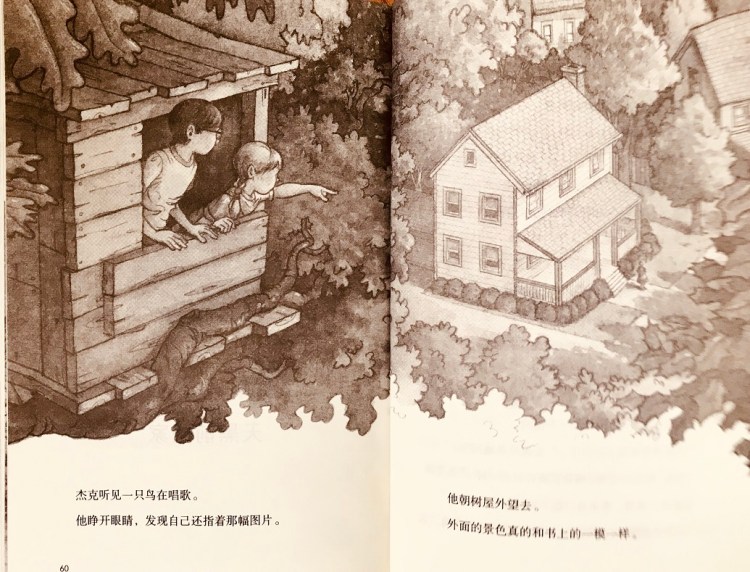
I have written an earlier post list out many other well regarded Chinese levelled readers, and also what to look out for in a good graded reading series. If you’re looking for other comparisons of graded reading books in Simplified Chinese, this might be a good place to start. I have another post comparison the key character lists used in different graded readers.

What each of the set boxes looks like, in case you’re ordering them online!

Teaching kids Chinese in a monolingual home – how to start?

One of the most common questions people ask me is how my kids learnt to speak Chinese, including their CCTV accent. Most don’t believe that neither I nor my husband can speak the language.

This is a post to affirm that yes it’s possible to raise your child bilingually, even if you or your partner don’t speak another language. Moreover, it’s also possible to do this without being in an immersion programme at school or a country where the target language is spoken (although both of these things would obviously help). 

Aside from the abundant research showing that parents who don’t speak two languages can raise bilingual children who are fully proficient in both languages, I also know from personal firsthand experience.   I have three kids who speak and read Chinese at near fluent levels, and now we’re working on becoming conversational in Spanish.  No one in our immediate family (including grandparents, aunts, uncles, etc) speaks these languages, nor are my children in immersion schools.   We have several friends who have also achieved the same thing in even more languages, so I assure you that my kids are not in any way unique or exceptionally gifted in languages.  This probably wasn’t possible ten year or more ago, which explains the fate of many migrant families who lost speaking their mother tongues despite valiant efforts. However now, with all the benefits of technology and the internet (and COVID), more and more families are deliberately choosing to become bilingual.

Raising a multilingual child is not impossible for monolingual parents, but nor is it easy.   Unlike bilingual families, monolingual parents will need to be more dependent on outside sources, such as community resources, schools or online tutors, to provide second language exposure and instruction.    If you’re lucky enough to live in a place like Singapore or parts of Europe, at least the odds are more in your favour as a diversity of languages are commonly heard and celebrated.  However, for monolingual parents regardless of where they live, many are not sure how to support their child on the journey.

This post has some practical hints about how we’ve made it a reality.  I believe mindset (followed closely by time and resources) are the main challenges in making it a reality, for most children.  With a bit of planning, for most children I think it would be entirely possible to create your own, sustainable route to bilingualism.

Considerations when deciding to learn a language like Chinese

Realise that language is a gift

I grew up in a totally monolingual family, in a monolingual English speaking country.  Acquiring a second language was never something seriously discussed or modelled.  Just like learning to play Mary Had a Little Lamb and Chopsticks on the piano, we learnt the obligatory counting from one-to-ten in a few languages, and that was it.  Languages aside from English were not taught consistently (or effectively) in schools, and they weren’t used in the playground.

It was only much later in life when trying to get into an acclaimed Business School that I first realised how important a language can be in opening doors.  Then later still, when working in a multinational with amazing colleagues and clients from culturally diverse backgrounds, I truly grasped how much I was missing out on in my understanding and appreciation of the world, including in my own language of English.  I made a promise to give my children the gift of languages, and to unlock more opportunities and more parts of their brains than I ever could.  What’s more, being bilingual has been linked as a preventative factor against Alzheimer’s Disease.

Some languages are easier than others (choose the language purposefully)

We chose Chinese as our first target language to learn.  As a mother, I am well aware that it’s among one of the hardest languages in the world (due to having a non-Roman alphabet and being tonal), but my kids don’t know that, and it hasn’t been any perceived hurdle to them.  

What my kids know is that Mandarin Chinese is the most widely spoken language in the world, and billions of people speak it with ease.  There’s no alphabet, which to a toddler makes it easier to grapple with pictures rather than Roman letters.  There’s less grammar than English (no verb conjugations) and there are no weird masculine/feminine words like in Spanish, which is appealing to my primary schooler who is now learning both these languages.

The real challenge in raising bilingual children in Chinese has been for me as a parent, supporting the children, because it’s impossible to read their textbooks or even attempt to pronounce a simple word like “ma” because there are four/five different tones it could be.   If we’d wanted an easier option, a language that uses phonetics or an alphabet that we’re already familiar with would be a logical choice, and I’ve noticed this now with our Spanish learning journey.    

Mindset makes a difference (if you’re not fully in, don’t start)

We have a vast array of friends where their parents speak a mother tongue language and yet the children just loath to speak it, or cannot speak it.   Maybe it’s an embarrassment, maybe it’s inclusion, maybe it’s a lack of love shared in the language, or maybe it’s because the parents don’t encourage it, or the language has no perceived relevance.  In any case, a child won’t learn if the passion and need isn’t ignited.

As parents there are SO many things we may naturally want our children to be good at – sport, music, drama, art, academia, etc.  There isn’t time in the day (nor $) to cram and excel on all fronts.  For us, we have prioritised languages.  This doesn’t mean we have abandoned everything else in this pursuit of being polyglots, but I’m making the point that I’m not expecting my children to also be music virtuosos nor Olympians.  We have a light-hearted approach to learning and playing, and I’ve always reiterated to my children that knowledge of a language is a good thing for our brains (scientifically proven) and a good thing for the world (we can be more affectionate and have more friends, which will spread world peace), and can helps us understand the heritage and culture of our ancestors (my children do actually have Chinese lineage to their ancestry).  

If you want a child to learn any language – be it first, second, or fifth – daily support and positive encouragement is necessary at home, even if it’s not spoken by the parents.   Enjoy the journey and remember the adage: the more you give, the more you get.

Plan to use the language (outside of the classroom or textbook)

You need to use the language and maximise exposure to it.  Science also shows that the sheer amount of time that a child hears (and interacts with) a language predicts their eventual success and fluency.  In fact, the most important aspect in learning a language is exposure to listening to it, which can be a struggle for many families.

If you (or your child) simply learn a language in a school classroom, I think it’s a tough ask to become truly bilingual.  Unless you study it VERY seriously, it will be hard to express oneself outside of the textbook.  Languages need to be actively used, and used 1-to-1.  Even 1 hour a day in a group class setting (I’m talking 20+ kids, which are typical school class sizes), the chances that you can effectively speak the language outside the classroom is very slim, unless you actively and actually give it a go!

Exposure is the way we each acquired our first language as a child, and indeed is the most effective way to learn a language.   Listen to popular music in the target language and do karaoke yourself; watch movies or visit a foreign film festival; go to a restaurant and try to order a meal.  Generate an intrinsic motivation to keep learning, and make the children see they possess a special skill!  Then, build a habit of learning – try to read books in the target language, or blogs.  Try to do everyday things in the new language.  Find a language partner and Zoom them once a week (or once a day).  If you go to church, is there a service conducted in your target language?  Research also shows children learn better from live interaction and conversation than passive media consumption.

As a parent, it’s helpful to get your skin in the game too.  I realised pretty early on that whilst there was no way I could expect to become even conversational in Chinese myself, I could still take some basic lessons about the tones and sentence structures, and also invest the time to listen to my children reading a book and ask them questions about it to reinforce their interest and understanding. 

I hate talking about scores, but there’s always a weird thing where parents don’t really know if their child is truly bilingual and they want some affirmation that the learning is working. Well, you can always take a proficiency test in whatever your selected language is.  For Mandarin Chinese, this is called the HSK and YCT (the test of Standard Chinese language proficiency of Mainland China for non-native speakers).  It’s similar to the TOEFL standard in English.   For me, I would rather look at the tangibles – could my child watch a news broadcast and explain to me what is happening?  Could they read and enjoy literature in the language?  Can they watch an entire movie and appreciate it?  If so, something is really working!

Follow the child’s passion – make it fun and practical

Don’t waste time with the wrong classes – rote learning from a book is not an ideal way to learn anything, let alone a learn a language.  In fact, a language is better being ‘acquired’ than ‘studied’.  Full immersion is a luxury not available to many of us, but I’ve seen the benefits of short, regular  1-to-1 fun immersive style classes with native-speaking teachers.  A punchy 25 minutes once or twice a week can be much better than an hour group class every day.  Make the learning engaging and effective, and engage the best teachers and resources to help you on this journey.

Start early and make it part of the regular routine

If you’re reading this and thinking it’s too late to help your children, it’s probably not.  Make the change today and don’t look back.

Science shows that only after 30 years of age, it’s likely too late to become effectively bilingual (in a language) for majority of people.  But prior to that, anything’s possible.  Moreover, the language acquisition from children under 10 is most amazing, in that they’ll likely speak the second language with a native accent, and will pick up the reading/writing much faster than a teenage leaner, as they’ll be broadly learning this in sync with learning their first language.

We have a daily routine for our languages.  The kids are in school during the weekday, so it’s a short window each evening we have.  Without fail, we’ll spend 30 minutes reading in the target language, and another 10 minutes playing a language app.  That’s just accepted as part of the regular evening routine.  There’s an inspiring father in the US teaching his kids Chinese who has put up a really detailed daily homeschool timetable of what works for his family, which I have learnt a lot from. There’s another fascinating home schooling mum of four at Fortune Cookie Mom, who has a helpful article about creating routines for learning Chinese.

Of course, I’m still on this journey too with my children.   Whether my kids will retain the language as teenagers and throughout their lives, I have no idea, nor do I know the effort it will take to continue at that pace.  But I know for now I have three kids who are passionate about languages, and for their ages, can effectively be called both bilingual and bi-literate, and aiming for trilingual. 

The fact that your child has the opportunity to acquire another language is fantastic! Regardless of their level of fluency, or how they compare to their peers, it’s great for the brain to have this early language exposure.   A language is a way to see another side to a culture, and even just learning a few words has been associated with increased empathy and improved cognitive functions such as memory, and problem-solving.  So, what is there to lose? 

Practical tools for learning Chinese (for parents who don’t speak it)

Where to start can be the hardest piece.  As a parent who cannot speak the language, without a doubt you need to rope in some external help.   I don’t believe there is a one-size-fits-all solution, and all families are different.

Simply to give you some inspiration, some things which are worked for us are to:

  1. Find a native speaker to teach your children:  this could be a nanny, and immersion school, or simply an online class.  We use a variety of online Chinese language classes through LingoAce, LingoBus, GoEast, and Vivaling all for different purposes.  In fact, I found these so effective that I even took my youngest daughter out of her immersion kindergarten and replaced it with an online class 2 x 25 minutes a week! There are whole armies of families who have learnt Chinese successfully purely through such online services, and likewise in China, there are students learning English exactly the same way.  I strongly believe that if a child cannot have regular, personal spoken exposure to the language (be it school, private tutor, grandparent etc or an online class) then it’s an uphill battle.   Plenty of great options for online Chinese languages classes can be found here.
  2. Embed the language in your house beyond the classes:  Stream Mandarin pop songs through Spotify, watch relevant television shows or Youtube, play games with flashcards, etc. With the internet these days, you can stream content from just about anywhere.  One easy tip is to have the radio on in the background in Chinese.  It doesn’t matter if no one appears to be listening – as the child’s ear will still become more familiar with the tones and pronunciation; your child will be absorbing, without realising.  Whilst there are plenty of Chinese radio stations, my main fear with listening to adult radio is that I don’t understand the age-appropriateness of content.   I’ve been well assured that Singapore radio will be appropriate – one good one is 96.3 好 FM (“Hao FM“) which broadcasts a mix of talk radio, entertainment and music (from the past and the present).   Then 93.3FM YES933 has modern pop and contemporary music.  Alternatively, stream curated children’s podcasts through a gadget like Luka.

    Another simple switch is to make are the settings on your Starhub or Netflix with default language to Chinese.  There are a wealth of children’s shows, especially cartoons, which have Chinese audio.  The children won’t know it any differently, as because they’re cartoons, there’s no obvious dubbing, lip syncing or issues with subtitles blocking the graphic.  The Disney Channel has nearly 100% of its content available in Mandarin. Once you get over this hurdle, then think about watching non-animated shows in Mandarin, as these will likely have more relevant conversational content.

  3. Follow their passions:  As mentioned above, do non-academic classes in the language like piano, art or debating, chess, etc.  If your child is too little for this, try a parent accompanied playgroup with singing and craft, like Mandarin Tree.   If your child is allowed to play computer games, let them play games in Chinese (good literacy apps like iHuman are a good start). If your child likes music, start to learn the language through a music class.  If your child likes geography, do an immersive geography class.  Do an art class in the language.  Having the motivation for second language learning in children is proven to be more important than language learning ability in reaching bilingual proficiency.  The pandemic has opened up all sorts of global possibilities for such classes and resources, and we’ve benefited amazingly from this. Look out for immersive classes on topics the child would enjoy (in my case Pokemon, Encanto, Minecraft and escape rooms are current favorites which can be found through Outschool in a variety of languages). Plenty of great non academic immersive classes taught in Chinese can be found here. 
  4. Read, read, read:  Yes, read with them, even if you cannot read the language. This is my number one tip, but I didn’t put it first because I didn’t want you to think I’m nuts! Make the time, sit with the child(ren), and encourage them.   We love reading as a family, and in fact, we prioritise Chinese reading over English reading.   Extensive reading is what I feel the secret to fluency is.

    Easiest ways to start out are audio books or books which come with a Chinese audio narration reading pen (eg Habbi Habbi, or eBooks like Ellabook), and then when the child gets more proficient and is starting to learn to read themselves, try graded readers which also have an audio option or reading pen (Le Le Chinese or Odonata).    As a child gains confidence and and can read independently, you can equip them with an optical scanning pen (like Alpha Egg or Youdao) so if they stumble upon a new word, they can learn pronunciation and translation themselves.

    Find books which will excite the children and as just as interesting as the English books they might be reading  (something like Mandarin Companion’s Secret Garden, Sherlock Holmes, or Magic Treehouse, Butt Detective etc).

    With deliberate and simple steps, it’s not hard to make reading in Chinese a habit – first step will be to pick up some basic language, but once that is achieved, reading is a great way to reinforce the learning and expand vocabulary.   We have two parts to our reading time: (1) reading characters and simple graded readers which the kids can read at levels appropriate to their learning, and this is done individually with each child for 10 minutes per day.  (2)  longer more interesting literature where we can all enjoy good story together!  We actually do the same in English and more recently Spanish too.  It’s like the difference between reading the simple “Mary & Jane” books, followed by the more exciting “Chronicles of Narnia”. Both have their place.

    I wrote a much earlier article about teaching children to read in Chinese as a parent who cannot. and demonstrated what is possible with just 20 minutes a day.

  5. Actively help with the languages: whilst I don’t speak the languages (and quite sure that I never will) I am more than just the cheerleader to the kids too.  I find classes for them, research home learning materials, talk to the teachers, test them on their spelling and vocab using Skritter. and sit with them through movies and books, and try my best to be part of the journey.

    As an interesting aside regarding literacy, all three of my children were able to read Chinese characters with more ease and fluency than their English, at the same age.  They could read short Chinese sentences at age two.  On average, a child learns to read English sentences around age 5, but because Chinese is pictorial, a younger child may be able to pick up more characters than recognise English words.  This obviously changes as the child gets older, and for us, English quickly became the dominate language for reading, since the alphabet has only 26 letters, not thousands of characters!

Finally, have a practical view of what is possible in terms of fluency and what it looks like for non native families.  Be realistic about what you want to be aiming for (or not!).

Enjoy your own journey!

Simplified Chinese Comic Books & Graphic Novels for Kids

This blog post outlines six sets of Simplified Chinese graphic novels which my children have enjoyed – they’re all originally written in Chinese, and are hard to put down.  They have touching stories, Asian graphics, and are overall great ways to enjoy the Chinese language further. 

What is a Graphic Novel?

Graphic novels are a great way to encourage a reluctant child to read … in any language.  We’ve found them helpful for Chinese because it breaks up the monotony of reading a 150+ page book of characters.

Some people may confuse graphic novels with comic books, because they essentially do look similar.  In English terminology, the key difference is that a graphic novel tells a complete story within the book, just like any other novel.  It will have:

  • A clear beginning, middle, and end
  • A central narrative within each book
  • Character development and personal journey occurs within the book (not in a prior book)
  • Precise, carefully considered dialogue and narration

For the purposes of this blog post, I’m using the term “graphic novel” to refer to full books (novels) which are written in pictorial (graphic) form, but which are not part of ongoing periodical series like Marvel, Tin Tin, Doraemon, Nao Nao, Pleasant Goat and Big Bad Wolf, GG Bond etc.  In Chinese language itself, I don’t think there is a distinction (yet?) between the genres as everything simply seems to be called 漫畫 (comic).

Why are graphic novels good for learning Chinese?

Some kids just love comics and drawings, so if you can get them to immerse in Chinese at the same time, it seems a good idea.  One of my kids can spend hours reading these books if I don’t stop them.

Key benefits of reading graphic novels in Chinese which we’ve seen first person:

  • Provides motivation to a reluctant reader
    Makes learning new words/characters more memorable if you discover them in an interesting narrative
  • Great stepping stone after bridging books, and before reading text-based novels (although could also be a crutch).
  • Allows complex topics like history or science to be communicated more easily in Chinese
  • Encourages a child to start writing their own comics in Chinese and proactively using the language and express their thoughts in it
  • Written test contains lots of spoken dialogue (speech bubbles) which provides a unique opportunity to read colloquial words and phrases that won’t be in the school textbook
  • (another benefit it that almost no comic books have pinyin, which can be a good step to move away from this)

What I especially like about well-written graphic novels is that they allow the reader to engage thoughtfully with both the text and the images …… so much can be put across from facial expressions, font sizes, panel layout etc.   And, these visuals provide really helpful context and clues for the Chinese text itself.

Great Simplified Chinese Graphic Novels for Children

Treasure Hunt Around the World Series 法国寻宝记  (我的第一本历史知识漫画书·环球寻宝记)

Author: (韩)小熊工作室
Publisher:  二十一世纪出版社
Country of original publication: China
Characters needed to read the book: ~1500
Length of book: ~180 pages
Books in set:  2 sets, with ~35 books in each
Best Ages:  8+
In Singapore NLB libraries: some

This consists of two sets of books – once focused on China (“Greater China Treasure Hunt series”), and the latter series focused globally (“World Treasure Hunt series”).  The books integrate history and geography, into fun graphic fiction.  Buka and his friends visit different cities (or countries) and solve mysteries to find scattered treasures, including many instances to ancient civilisations.  The books include famous buildings and places, foods, clothing, and social customs of the various countries and regions. 

Each book also contains several non-fiction pages with photographs and information about the country which the characters are visiting.  It’s a good way to learn about different cultures and traditions around the world (or within China, if you read the specific Chinese series).

[I’s possible the concept for this series originated from Korea?  I’ve read in a few places about Korean versions…. Really not too sure, but it clearly now exists in multiple languages, including English].

The Kid from the Big Apple 我来自纽约

Author: 张爵西 编剧 / 漫魂 漫画 Zhang juexi
Country of original publication: Malaysia
Characters needed to read the book: ~2000
Length of book: 220 pages
Best Ages:  9+
In Singapore NLB libraries: No

The Kid from the Big Apple has been adapted from a heartwarming 2015 Malaysian film of the same name, which garnered several awards at both the Macau International Film Festival, and Malaysian Film Festival.  Technically this means it’s not a graphic novel, but a film comic (电影漫画)!

Sarah is a tween girl from New York, who is sent to Malaysia to stay with her grandfather when her single mother has to deal with some serious work-related matters.  She’s unfamiliar with the Chinese language and customs and is lost in this new country in an old HDB estate.  She spends a lot of time texting and eating potato chips, and observing the world around her.  The book also deals with generational issues and aging.  It would be relatable to many children who are growing up in a culture that is different from that of their grandparents.

I would recommend watching the movie first even …… even for a parent who doesn’t speak Chinese, you’ll still understand most of it.

Note: Does contain some curse language.

Warm Hearts Original Comic Series 温情原创漫画系列

Author: 蓝国清
Publisher:  Kadokawa Gempak Starz
Country of original publication: Malaysia
Characters needed to read the book: ~1800
Length of book: ~150 pages
Books in set: ~50
Best Ages:  9+
In Singapore NLB libraries: No

This series title doesn’t exactly shout out “awesome book to read”.  But they really are heartwarming.  Each story focusses on a tough topic and a teenager, and feature family/friends working through the issue.  We haven’t read them all, but we purchased a few of the more recent stories, including:

  • 温情原创漫画系列 43:三人四足  Four-Legged Race:   With parents constantly quarrelling and on the verge of divorce , a young girl is confused about what to do or think.  Deals with issues of a father who believes a mother should focus on family and children, and a mother who works as an emergency nurse and is trying to be a role model for her family.  Book contained images of both Malaysia and Singapore, including Universal Studios.
  • 温情原创漫画系列 41:我家只有四平方米 My Four Square Metre Home: Guan Zongfu comes from a wealth family and privileged lifestyle until his family becomes bankrupt, and his father disappears.  The story revolves around the sudden change in his life.
  • 温情原创漫画系列 39:离地一公尺 Walking on Air:  Wen Zhiren is great at jumping, and uses this to persuade the basketball coach to let him join the team.  He’s not welcomed by the teammates, and he knows nothing about basketball.   But, he practices hard and tries to earn his place rightfully.

The Malaysian publisher of this series says in their own words that this written to “cultivate values and create hope”.  Each story is very insightful, inspirational, real and emotionally charged. We’ll look forward to reading more, they just take some time to get through.

Sumikko Gurashi 角落小伙伴  (“Little Corner Partners”)

Author: 日本监修San-X编  and 横沟百合
Publisher:  接力出版社
Country of original publication: Japan
Characters needed to read the book: ~1500
Length of book: ~112 pages
Books in set: 3
Best Ages:  8+
In Singapore NLB libraries: Yes – in eBook form only

Sumikko Gurashi are a set of fictional characters produced by San-X, the Japanese stationary company who have marketed several cute and quirky characters over the years (essentially a competitor against the other Japanese company Sanrio with Hello Kitty).  Sumikko Gurashi was popular enough to make it into a film, and this book set is a spin-off from that. 

The main Sumikko characters are polar bear who doesn’t like the cold, a gherkin-eating penguin who isn’t sure he’s actually a penguin, a dinosaur who pretends to be a lizard, an anxious cat, and a piece of leftover pork cutlet. These characters are castaways in everyday life, and they feel most relaxed when they are away from the centre of attention, and in a corner.  It’s an eclectic bunch, and the pages have relatively less text and less poignant graphics than any of the other books in this list, and certainly the least culturally relevant.  But for some reason, I have a daughter who really likes this series.  Including this on my list is my one anthropomorphic exception!

Sumikko Gurashi is known in Taiwan as 角落生物  “Corner Creatures”, for those searching for Traditional Chinese versions.

The Ballad of Ya Ya 丫丫历险记

Authors: Jean-Marie Omont, Charlotte Girard, Golo Zhao (Artist), Patrick Marty (Artist)   
Publisher:  Sichuan Children’s Publishing House
Country of original publication: France / China
Characters needed to read the book: ~1800
Length of book: ~210 pages
Books in set:  9
Best Ages:  9+
In Singapore NLB libraries: No

This is another international award-winning graphic novel series, and came about as a collaboration between French and Chinese creatives.  It’s filled with adventure and action, and really vibrant illustrations.  In fact, this is the most beautifully drawn graphic novel we’ve seen, with rich yet delicate colour and plenty of emotion.

Ya Ya, the 8 year of daughter of a diamond merchant, lives a privileged life in pre-World War II Shanghai.  However, she becomes separated from her parents during a piano recital she’s secretly performing in, when bombs finally fall on the city.  The tale follows how Ya Ya becomes unlikely friends with an orphan, and hopes to reunite with her family, amid a backdrop of ongoing war between China and Japan.   It’s an engaging read (at least for a child).

The amount of text per page is less than some of the other books mentioned above, however content covered is really for upper primary only.  It has levels of violence in it and a bit of coarse language (e.g 混蛋). The poor language is made up for by the beautifully realistic views of old Shanghai, with the illustrator depicting historical scenes as much as possible, including comparing many paintings, and even living for a week in a remote town in Hunan where many of the buildings and features still resemble yesteryears. For a child who enjoys war history novels (eg Anne Frank’s diary, Sadako’s Crane, The Endless Steppe, etc) this is an eye-opening perspective from China.

This bookset is available (first few books) on the great eBook app Ellabook, and watching the first book as an introduction could be a nice way to help a child connect with the story before they venture out and read it independently.

Little Dim Sum Warriors

Authors:  胡恩恩 吴荣平 Dr Woo Yen Yen, and Colin Goh (illustrator)
Publisher:   饮茶工作室 Yumcha Studios
Country of publication: Taiwan
Characters needed to read the book: ~300+
Length of book: 40 pages (20 English, 20 Simplified Chinese)
Books in set:  8 (physical books) and ~16 on the app
Best Ages: 3 to 7
In Singapore NLB libraries: Yes

Little Dim Sum Warriors books are like an introduction into graphic novels….. they don’t have comic panels in them,  and they’re not long enough to be considered a novel.  They’ve been cleverly constructed in a simple comic-style with speech bubbles and sounds, for younger readers. They’re bilingual flipbooks, with English on one side, and flipping the book over reveals Simplified Chinese on the other side (without hanyu pinyin).

The theme of each book has been deliberately selected to encourage resilience and open-mindedness in children, touching issues of feelings, friendship and social issues.  The text selected is pedagogically sound and designed for early language recognition. The book themselves are fun and funny.

These books can also be accessed in soft copy through the Dum Sum Warriors Bilingual Learning app, which comes with full audio recording in both English and Mandarin.  It’s nice for younger children to read along with the audio, and then practice reading by themselves.   The audio is done by professional actors (note: some Singlish slips into the English too).  The app also has accompanying games and activities related to the Chinese characters and content in the stories, which is a good learning complement.  I have an earlier blog post with an interview of the authors of Dim Sum Warriors.   

For a child who likes art (and especially cartoons), there’s also an online live-streamed Bilingual Comic Jam with the book’s author and illustrator twice monthly, for those who join the Dim Sum Warriors Club. 

How we read graphic novels in Simplified Chinese?

I insist that my children must read the books, and not just look at the pictures and gloss over. When the story has a great narrative, they do genuinely want to engage in it and read it properly too. 

Generally, the kids will leaf through it at the start to check if the story seems fun and get the context, but after that, they will read it independently and fulsomely.  When they come across an unknown word or phrase, the children use their Alpha Egg or Youdao pen to pronounce that section.  Usually, they don’t need to use the translate/definition function, as they’ll get the context simply from the graphics and surrounding text.

Finally, when they’re finished reading (for graphic novels, but not for general Chinese comics), I purposefully ask the children to recount to me what is happening in English and re-explain the story to me as we look at the pictures together for a speed-read recap together.   Some graphic novels have taken us weeks to get through, and we’ve had really meaningful conversations about them.  So much so that I often wish I could read the books myself!  In some cases, I’ve reverted to watching the movie or finding an English translation, so I can truly understand the heart of the stories too.

How can I tell the difference between a Comic and a Graphic Novel?

Okay, so there is certainly some is debate about the difference between the term “graphic novel” and “comic”., and the lines are indeed blurry Generally, a graphic novel is more substantive than a comic book, as I hope you’ll see from my posts above. Key differences you might observe are that graphic novels are:

  • Usually longer in length
  • Usually cover a wider array of subjects and genres
  • Are stand-alone, not a sub-segment from a longer-running narrative or series such as Marvel.  They still could be part of a series/set, but it’s not necessary to have read prior books in order to understand each individual one.
  • Not produced as readily/frequently as comic books
  • Usually more expensive

Personally, I have seen how effective this genre is in engaging children AND realizing there is a clear difference between mass-produced comics and well-written/drawn graphic novels.

Are other comics bad for learning Chinese?

No no, why would you think that? I’m simply using this post to highlight how great graphic novels are in particular, but there’s nothing wrong with general comics either (what could be bad if it involves more language exposure, right?).  My kids do actually read many serialised Chinese comic books too in their own time, in addition to Chinese Graphic Novels.  One of my kids is a big Pokemon 精灵宝可梦特别篇 fan, and another likes Minecraft 我的世界·冒险故事图画书 .  We do have plenty of these more inane comic books lying around the house too. They’re worthy of a photo, but not really an entire blog post.

Where to buy good graphic novels and comic books for children in Singapore?

Every book listed in the post above we purchased (yes full price we purchased them) from Maha Yuyi bookstore in Singapore (not sponsored or affiliated).  They just have so many wonderful books for upper primary age readers.  Many of these books you could also likely find at Popular or Shoppee.  The one exception is the Ballad of Ya Ya, which is really hard to find in Singapore.

What else is there to know?

If you’re curious about what else is in our book collection and how I’ve tried to select books, my previous post is an analysis of all the 1100+ books we currently have, and some background into the whys and where they came from.

Actually I’d love to know what your family’s favourite graphic novels are too! I love looking at suggestions from others, and if you do too, I’d suggest checking out Motherly Notes for kids aged 7+, where you can find a huge list of great Traditional Chinese bridging book and chapter book reviews for inspiration. For younger kids, Growing Hearts 123 has nice suggestions for Simplified Chinese picture books and comics.

Some earlier posts to look at on my Lah Lah Banana blog related to literacy would be:

Best Chinese Pop Songs for Kids: Mando pop & C-pop for families to enjoy

Singing favourite songs is a great way for a child to learn a language.  Listening to Chinese lyrics can help a learner to pick up common vocabulary and new phrases, with catchy jingles.  Whilst it’s easy to find little kids songs in Mandarin like Twinkle Twinkle (小星星) or Two Tigers (两只老虎) or even Baby Shark (碰碰狐),  what about for an older child (or for a mother who is sick of hearing nursery rhymes on repeat!)?

In this post, I’m sharing a few pop songs for families to immerse themselves in Mandarin Chinese and attempt to sing along to. The issue we’ve had with many pop songs is the combination of:

a) the lyrics are not always appropriate

b) they’re very complex words

c) they’re too fast to appreciate

d) all of the above.

This list below is not like that.  This is our list of the catchiest and cleanest Mandopop / Cpop songs we’ve enjoyed, from our favourite Malaysian, Singaporean, Taiwanese and mainland Chinese divas and crooners.  

Chinese Music can be found many places for streamlining – Spotify, Youtube, Ximalaya, etc. 

Joyce Chu 朱主愛

(nicknamed ‘Si Ye Cao’ 四葉草)

Joyce is brilliant Malaysia singer-songwriter and actress, who has produced several ridiculously catchy melodies.  In 2020 she was port of the reality TV Chinese girl group competition Produce Camp (which is also a good watch on Youtube watch)

  • Malaysia Charbor  馬來西亞查某 – this one went viral fast!  Quite an eccentric song explaining who Joyce Chu really is! Fun for a child familiar with South East Asia region and simple recognisable vocabulary  https://www.youtube.com/watch?v=79uuj5hXsOg

Plenty of Joyce Chu available to stream.

A Si 阿肆

A Si is a lesser known female singer from Shanghai, who does mainly folk and pop.

  • Super Idol 热爱105°C的你 This is super catchy and fun, packed with helpful vocabulary which all the girls picked up at school.  Even my four-year-old knows it off by heart.  Just a watch out for the meaning of the lyrics…. I don’t fully understand the meaning behind some lines, so vet for yourself. https://www.youtube.com/watch?v=ZFiEL6Gq46Q

Jay Chou 周杰伦

No list would be complete with Jay Chou, dubbed the “King Of Mandopop”.  Chou is a Taiwanese singer, songwriter, rapper, record producer, actor, film director, businessman, and magician (!). 

In terms of those with the best lyrics for learning:

  • Listen to Mom 听妈妈的话: A nice song, but particularly lovely for Mother’s Day or a treat for a grandmother who understand Chinese https://youtu.be/_B8RaLCNUZw  

Michael Wong  王光良 (Guang Liang)

Guang Liang is a Malaysian singer and composer,  often known as “Prince of Love Songs”,  as he tends to write love-themed ballads.  Great background music, slow-paced, with meaningful lyrics when you really start listening.

JJ Lin 林俊杰

JJ Lin is a Singaporean singer, songwriter, and actor.  He sings in English, Hokkien and Cantonese, in addition to Mandarin, giving him global appeal to many different Chinese speakers.  Impressively he has written over 100 songs for other artists to perform. 

  • Dimples 小酒窝 – this one is a particular favourite, perhaps for a slightly older child (we skip over the line where he feels like he’s drunk!) https://youtu.be/h-woMj_Vt0A

Comic Boyz 可米小子

Comic Boyz is a Taiwanese boy band quintet, which no longer exists.  They did sing several notable songs, including Heart of Superman which was written by JJ Lin mentioned above.  Lyrics are interesting for learners and a bit different from the usual boy band songs.

They have another popular/catchy one (called Number 2), for those who are comfortable with kids singing songs about thwarted lovers.

S.H.E

S.H.E is a three-member Taiwanese girl group, whose first name initials make up the fun acronym.  They formed in 2001, and are regarded as being one of the most enduring Mandopop groups out there.

Most of their songs are too grownup, but they do have one fun one making puns of the Chinese language itself.

Meng Meiqi  孟美岐

Meng Meiqi is a young Chinese singer who is a member of a South Korean-Chinese girl group called WJSN.  She too is a product of the Produce Camp reality show series.   Her first full solo song release was Jiang which within the first twenty minutes of release became the fastest-selling digital album on QQ Music with over 1 million digital sales.

Mao Buyi 毛不易

Mao Buyi is a Chinese singer-songwriter who rose to prominence when he won the all-male singing competition The Coming One in 2017.  He has had two songs that reached #1 on Chinese singles charts.

He has many other songs which are beautiful too, but vocally a challenge to attempt learning.

Teresa Tang 鄧麗君

Taiwanese singer Teresa Teng is old school, and she’s widely regarded as having one of the most beautiful voices in the history of Chinese music (and one of the most beautiful voices on Luka for sure), and dubbed “Asia’s Eternal Queen of Pop”. She’s very much a cultural icon for her contribution to pop music.

Our particular favourites:

Stephanie Sun  孙燕姿  (Sun Yan Zi)

Stephanie is a Singaporean singer-songwriter, who in 2000 won 115 newcomer awards in Asia, including the Best New Artist award in both Taiwan and Singapore.  She’s known as the “Pop Diva of Singapore”.  We don’t especially *love* any of her original songs to sing along to, but she’s also done plenty of them (and great covers of other famous songs too). 

In terms of her original songs to look out for, try:

  • 克卜勒 Kepler  
  • 第一天 First Day
  • 遇見 Encounter
  • 綠光 Green Light

Charlie Zhou Shen 周深

This is from left field….. a young Chinese male singer with an angelic voice.  The songs are better for listening than for singing along to.  I’ve included them because they’re beautiful and the lyrics are interesting for a child.

You can find Zou Shen’s his full album here, which is 40 minutes of bliss: https://www.youtube.com/watch?v=KjjEMCUbSfE

LuLu Huang 黃路梓茵

Lulu is a Taiwanese television host and actress, with a handful of quirky songs to her name too. 

Bonnie Loo 罗美仪

Bonnie is a Malaysian actress based in Singapore, with a knack for catchy songs

And on the topic of Disney, there are plenty of other Chinese soundtracks we’ve found on if you use the following searches

  • Frozen 冰雪奇缘
  • Beauty and the Beast 美女与野兽
  • Mulan 木兰
  • The Lion King 狮子王
  • Aladdin 阿拉丁

And specific Frozen songs:

  • Let It Go 随它吧
  • Do you Want to Build a Snowman 小石头和孩子们
  • For the First Time in Forever 测试的感觉
  • Love is an Open Door 爱的门打开了
  • Into the Unknown 寻找真相

Idol Girls爱朵女孩 (Aiduo Girl)

Idol Girls are mainland Chinese female singing group who churns out Mandopop. My kids know a few off by heart.

Other songs of note are:

Bilistar – Poetry Romance 诗歌奇缘 (诗歌奇妙盒)

This is not one singer, but a production from Bilistar, consisting of 50 original short songs combining beautiful poems from some of China’s greatest poets with musical accompaniment by renowned musicians.  It can be streamed through Ximalaya. For Luka users, I would highly recommend getting the physical box set which comes with beautiful written lyrics cards, making it perfect for a family karaoke session.  It’s a really fun way to pick up lots of child-friendly lyrics and classical history together. 

Which is your favourite?

These are our favourite pop music discoveries. I wonder if it covers your favourites? 

If you’re still looking for more suggestions, bloggers Ms Claudia and Mandarin Baby Mama each have their top pop lists too, including Spotify lists!

If you arrived at the end and have found this helpful, maybe there are some other posts on my blog you might also enjoy. As a parent who doesn’t speak any Chinese, we’ve relied heavily on online tools, clever robots, and recommendations of others in our Chinese learning journey. Some of my earlier posts are: